
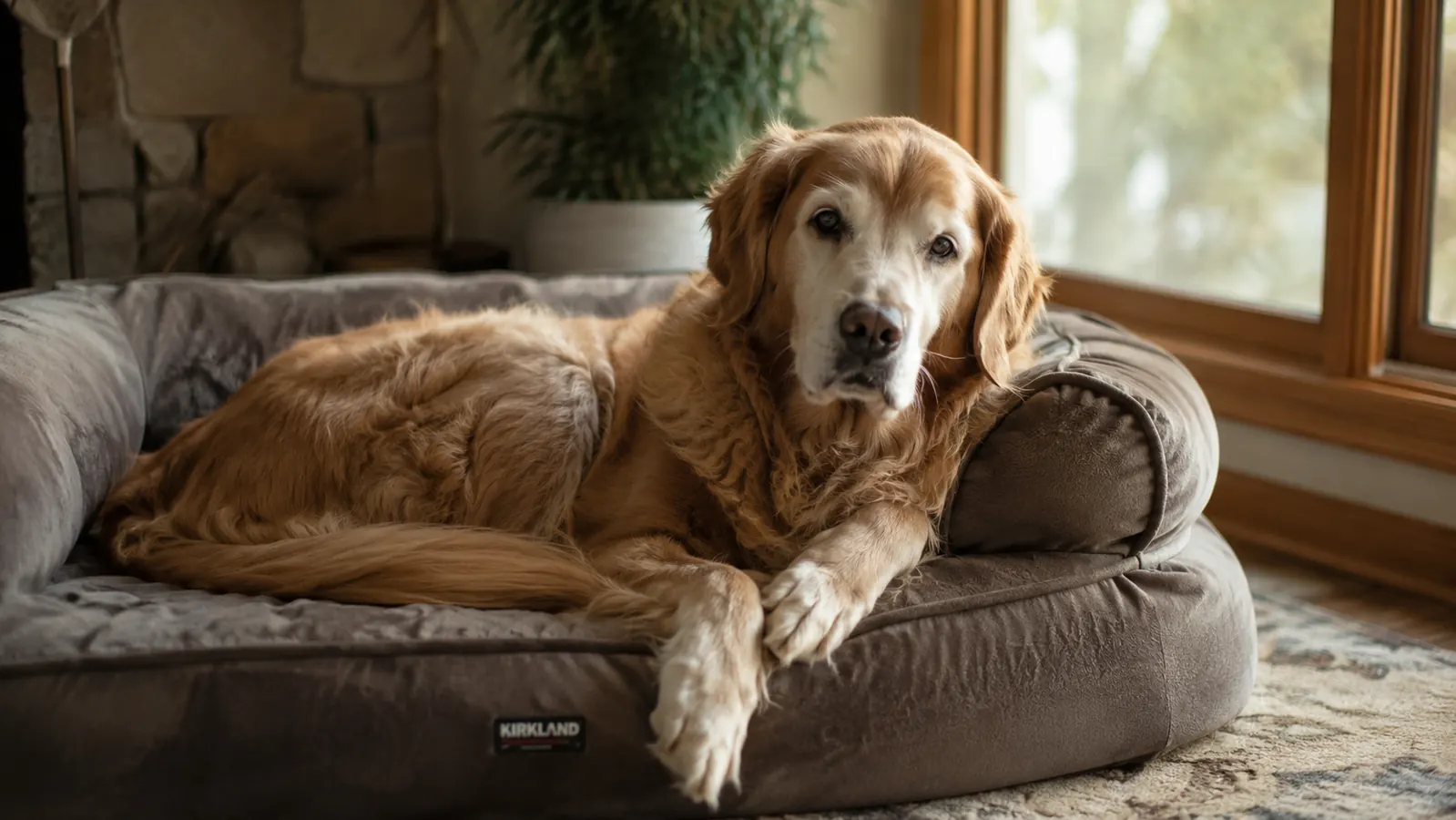
My Lab mix, Rosie, is 11 years old and 82 pounds. For the first decade of her life she slept on whatever flat cushion I grabbed from a discount store. Then I noticed she was stiff every single morning, circling three or four times before she could settle at night, and grunting audibly when she stood up. I thought it was just age. Turns out, a lot of it was the bed. When I switched her to the Bedsure orthopedic dog bed, I could see the difference inside a week. She still has arthritis, but the floor-level struggle is gone.
If you have a senior dog, a large-breed dog with joint history, or any dog that seems restless at bedtime, here are 10 specific reasons an orthopedic bed does what a standard cushion or thin mat cannot.
Your Dog Is Already Sleeping on Something. Make Sure It Is Not Making Things Worse.
The Bedsure orthopedic dog bed has over 51,000 ratings and a 4.5-star average. It ships in multiple sizes for dogs from 30 to 100-plus pounds, and the cover runs through a standard washing machine.
Amazon Check Today's Price on Amazon →It Distributes Weight Across the Whole Body, Not Just the Pressure Points
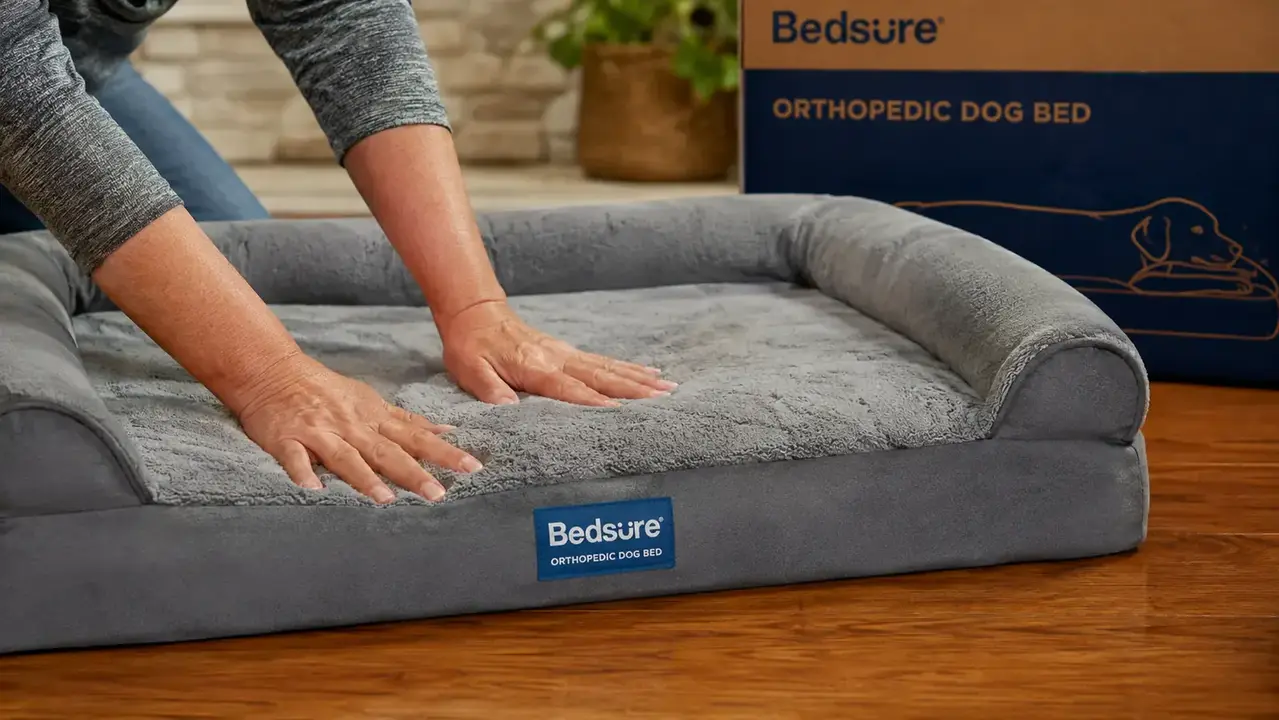
Standard poly-fill cushions compress under a heavy dog until there is almost nothing between the dog and the floor. Dense orthopedic foam, like the egg-crate or solid-base foam in the Bedsure bed, spreads weight evenly so no single joint takes the full load. For a 70-pound dog lying on a hip, that difference is measurable. The hips, elbows, and shoulders sink in slightly rather than bottoming out, so pressure is distributed rather than concentrated.
It Reduces the Grinding That Causes Morning Stiffness
When a dog's joints are not supported during sleep, small repetitive compressions happen throughout the night as the dog shifts weight. Over time, this contributes to the stiffness we write off as "just being old." Orthopedic foam dampens that movement. Dogs that used to need five minutes to fully loosen up in the morning often show a faster transition to normal gait once they have a supportive surface to sleep on.
The Low Entry Height Makes Getting In and Out Less Painful
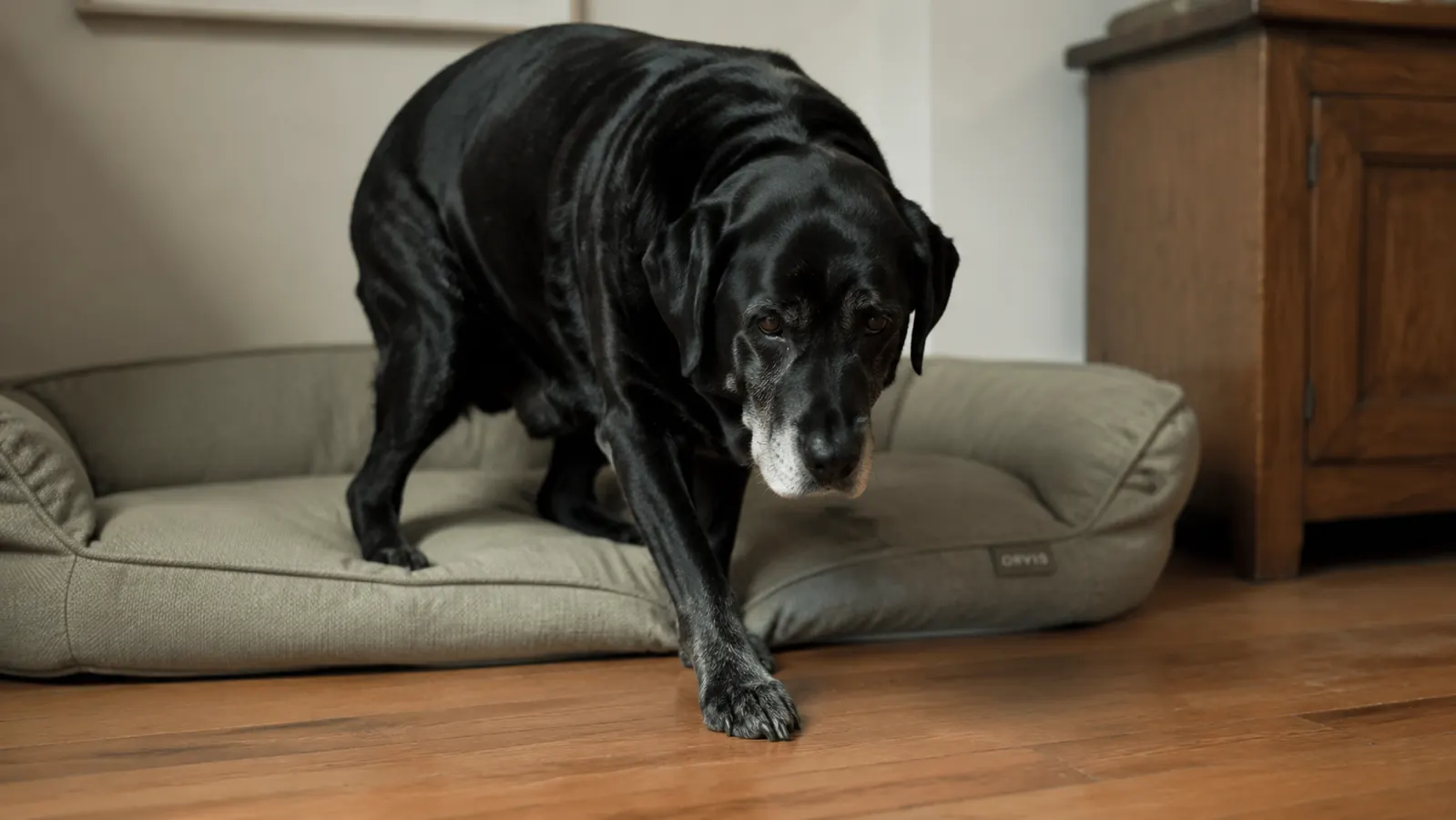
A lot of dog beds marketed as "orthopedic" are built tall, which means a dog with hip dysplasia or bad knees has to step up to get in and down to get out. That defeats the purpose. The Bedsure design sits low to the floor. The bolster sides are soft enough that a stiff dog can push through or step over them without torquing a sore hip. Small detail, big quality-of-life improvement if your dog has been avoiding its bed.
Deeper Sleep Means the Body Repairs Itself More Effectively
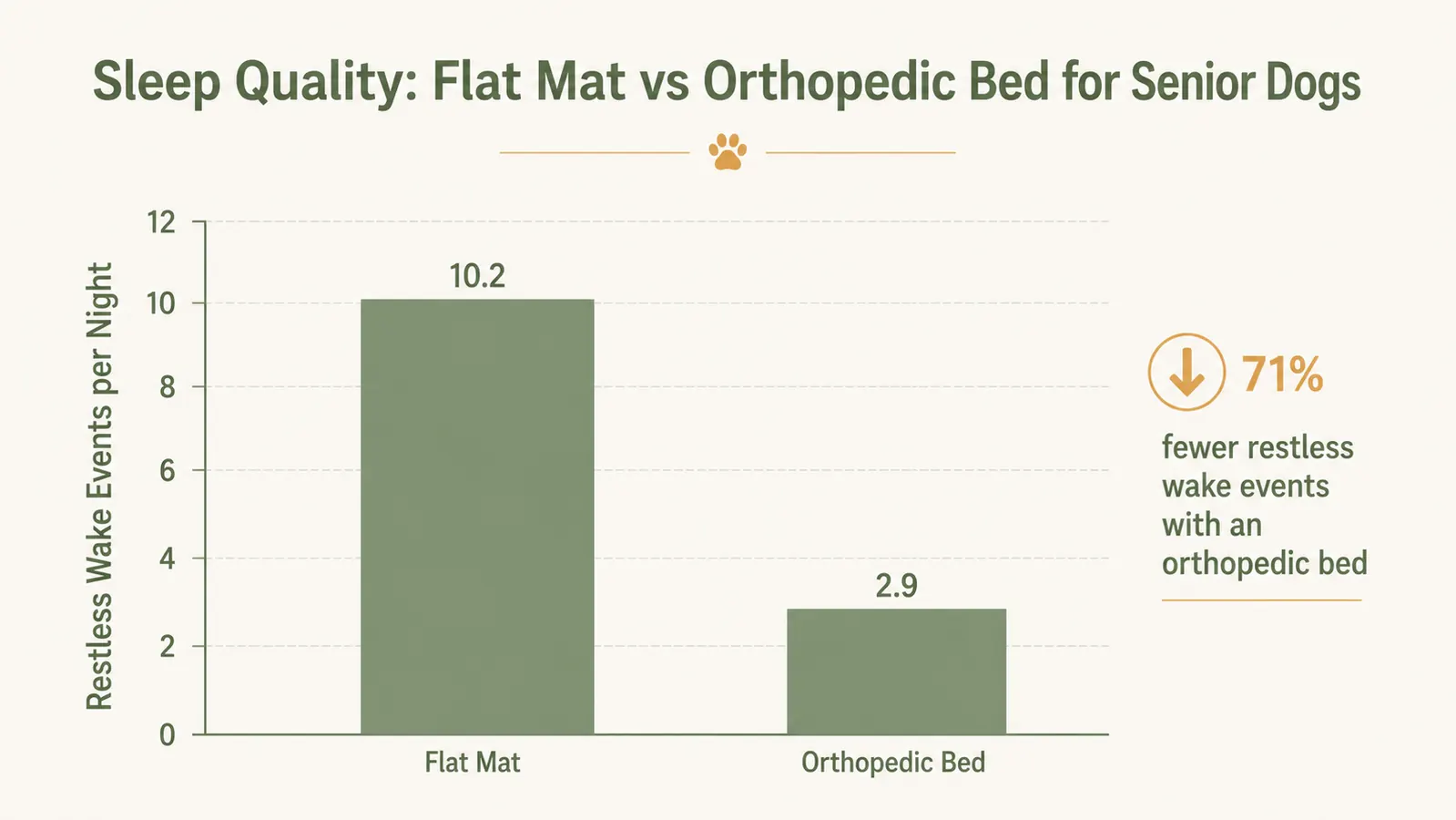
Dogs in chronic low-level pain tend to sleep lightly. They wake up, reposition, and never fully enter the deep rest phase where tissue repair and immune function peak. A surface that removes pressure-point pain lets a dog sleep through the night without those interruptions. Owners who track their senior dogs with activity monitors regularly report fewer nighttime position changes after switching to an orthopedic bed.
The Bolsters Give Anxious Dogs a Place to Rest Their Head and Neck
Senior dogs often become more anxious as their hearing and vision fade. Bolstered sides serve double duty: they give a dog something to lean against, which many dogs find soothing, and they support the neck at a natural angle rather than letting the head drop forward onto a flat surface. Dogs that pile against couch cushions or your leg tend to take strongly to a bolstered orthopedic bed. Rosie wedged her chin into the corner bolster the very first night.
Rosie wedged her chin into the corner bolster the very first night. I had not seen her settle that fast in two years.
A Washable Cover Means You Will Actually Keep It Clean
Senior dogs have more accidents, shed more heavily, and sometimes have skin conditions that require a clean sleep environment. A bed that is difficult to wash gets skipped. The Bedsure cover unzips completely and goes into a standard top- or front-loader. The foam base air-dries while the cover runs through a wash cycle. I wash Rosie's cover every two weeks and it has not pilled, shrunk, or torn through repeated washes.
It Keeps Large Dogs Off Cold Floors Without Overheating Them
Hard floors, tile especially, get cold at night. Cold joints stiffen faster. A dog on a cold floor is essentially icing its own hips and elbows all night long. Orthopedic foam insulates from below while remaining breathable enough that dogs do not overheat. This matters especially in climates where floors drop into the 60s or below overnight, and it matters for short-coated breeds like Labs, Boxers, and Dobermans who cannot self-insulate as well.
The Foam Does Not Flatten Permanently After the First Month
This is the failure mode of almost every cheap orthopedic dog bed I have bought. The foam is fine for three weeks, then it compresses to nearly nothing and you are back to the same problem. The Bedsure base uses a denser foam than most beds at this price point. After eight-plus months with Rosie sleeping on it every night, it has some compression in her preferred spot but it has not bottomed out. That durability is what makes the price reasonable over time.
It Supports Dogs Through Surgical Recovery or Chronic Condition Management
If your dog has had a TPLO repair, hip replacement, or spinal surgery, the surface they recover on matters as much as the rehab protocol. Vets and canine physical therapists routinely recommend orthopedic foam for post-surgical rest because unstable or hard surfaces interfere with healing and tempt dogs to reposition in ways that stress the repair site. Even for dogs managing a chronic condition like degenerative joint disease, a consistent orthopedic surface is a low-cost daily intervention.
It Signals to Your Dog That There Is a Safe, Predictable Place to Rest
This last one is less quantifiable but I hear it from every dog owner who has made the switch. Once a dog figures out the bed is comfortable, they use it consistently. They stop circling endlessly, stop trying to squeeze onto the couch, stop sleeping on the hard bathroom tile. A dog that has a reliable, comfortable spot sleeps more and stresses less. For senior dogs especially, reducing that ambient restlessness has a noticeable effect on mood and energy during waking hours.
What I Would Skip
Flat foam mats sold as "orthopedic" without any bolster or structure are usually just thin memory foam cut to dog-bed size. They compress fast and offer no neck support. Memory foam marketed for dogs is often less dense than advertised, and you cannot verify it without cutting the bed open. If the bed does not give you a full-length zipper for washing and some form of raised edge for head support, I would pass on it regardless of what the label says.
I would also skip anything under about two inches of total foam depth for a dog over 40 pounds. Thin foam compresses under a heavy dog in the first few weeks. By six months you have spent money and you are back to square one. For my full long-term breakdown of how the Bedsure orthopedic bed held up over eight months with Rosie, read the detailed review at the link below.
And if arthritis or joint disease is already a confirmed diagnosis, pair the bed upgrade with a conversation about sleep position, ramp access, and supplement options. The bed alone makes a real difference, but it works best as part of a broader joint-care approach. I go deeper on that in the guide on helping arthritic dogs sleep better.
Rosie Was Struggling Every Morning. The Right Bed Changed That in One Week.
The Bedsure orthopedic dog bed is one of the most-rated beds on Amazon for a reason. Thick foam base, washable cover, bolstered sides, low entry height. If your senior or large-breed dog is stiff, restless, or avoiding their current bed, this is the upgrade I would make first.
Amazon Check Today's Price on Amazon →