
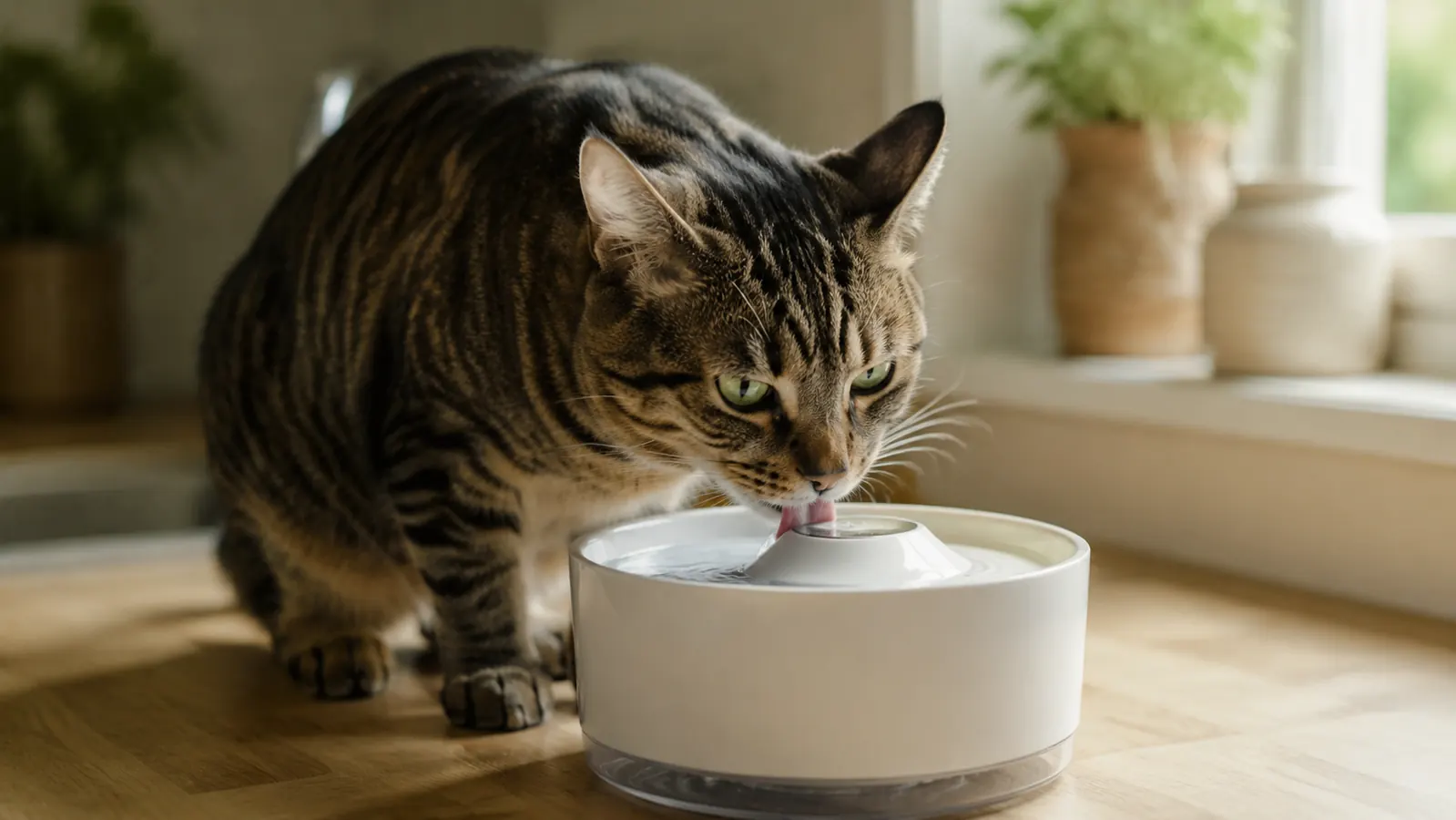
My cat Thistle went almost three years drinking barely half of what she should. The vet flagged it at a routine visit, I bought a second water bowl and moved it across the room, and she ignored both of them with the dedication only cats can muster. If your cat treats water like an insult, you are not alone, and the fix is not as complicated as you might think.
Cats are physiologically wired to get most of their hydration from prey, not from standing water. A bowl of still water sitting ten inches from their food dish is basically the worst possible setup for a species that evolved to distrust water that isn't moving and isn't separated from their kill site. Once I understood that, everything clicked. The Veken 95oz pet fountain became the centerpiece of the system I built for Thistle, and within three weeks she was drinking visibly more every single day. Here is the exact five-step process.
If your cat barely touches the water bowl, a circulating fountain changes the whole equation.
The Veken 95oz pet fountain has over 49,000 ratings and costs less than a vet copay. It keeps water moving, filtered, and fresh around the clock, which is exactly what picky cats respond to.
Amazon Check Today's Price on Amazon →Step 1: Ditch the Bowl Next to the Food Dish
This is the mistake almost every cat owner makes, including me for an embarrassingly long time. In the wild, cats instinctively avoid water that is close to a kill site because decaying prey contaminates nearby water. Your cat's brain does not know the difference between a dead mouse and a bowl of kibble. Placing the water right next to the food dish triggers that ancient aversion every single time they walk up.
Move the water source to a completely separate room, or at least to the opposite end of the kitchen. I put Thistle's fountain in the hallway outside the bathroom, which is about fifteen feet from where she eats. Within two days she was stopping at it unprompted. The distance matters more than anything else on this list, so do this first before spending a dollar on anything.
A secondary location also helps. If you have a two-story home, put one water source upstairs and one downstairs. Cats are opportunistic drinkers, and having water along their natural patrol routes dramatically increases how often they stop for a sip.
Step 2: Switch from Still Water to a Circulating Fountain
Moving water carries more oxygen, stays cooler longer, and signals to a cat's brain that it is safe to drink. That is not marketing copy, it is the same hardwired behavior that makes cats prefer dripping faucets to full water bowls. A recirculating fountain replicates that constantly without you standing at the sink waiting for your cat to deign to show up.
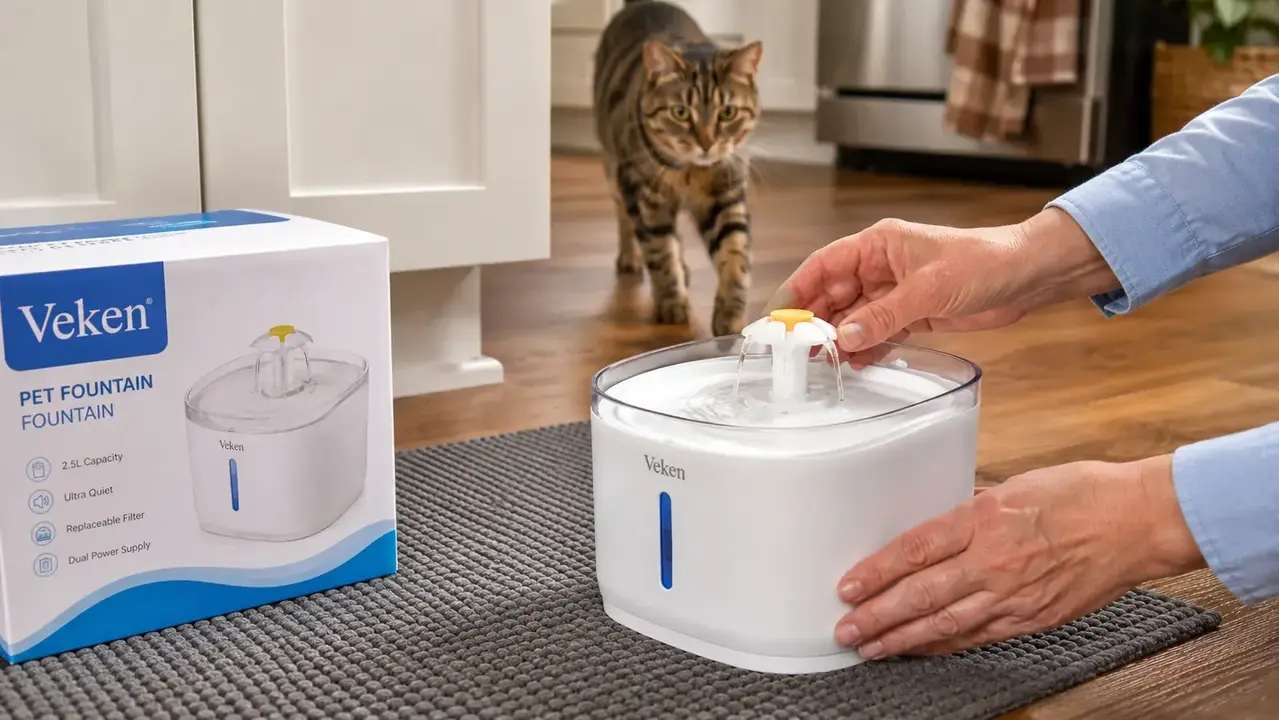
I landed on the Veken 95oz fountain after going through two cheaper units that either died inside a month or made a grinding noise loud enough to wake me up at 2am. The Veken is quiet, holds nearly three liters so it doesn't need daily refills, and the triple-layer carbon filter keeps the water tasting fresh rather than like plastic. The flower-top spout creates a gentle bubbling stream that Thistle walked up to and sniffed within the first hour it was running.
One practical note: run the fountain for 48 hours before expecting your cat to use it. Cats investigate new objects cautiously, and a device that suddenly appears and makes noise needs to become boring before it becomes useful. Leave it on, don't push your cat toward it, and let them discover it on their own terms.
Step 3: Optimize the Water Temperature
Most cat owners fill the bowl with whatever comes out of the tap and call it done. Cats are more particular. Many cats strongly prefer water that is slightly cool, somewhere around 50 to 60 degrees Fahrenheit, which is noticeably cooler than room-temperature tap water in most homes. The Veken fountain helps here because the constant circulation and the carbon filter keep the water several degrees cooler than a static bowl sitting on a warm floor.
In summer I add two or three small ice cubes to the Veken reservoir in the morning. Some cats are fascinated by the ice itself and will bat at it, which gets them close enough to start drinking. Others just appreciate the cooler temperature without caring about the source. Either way it costs nothing and takes ten seconds. Try it for a week and see if your cat's interest picks up.
If your cat categorically ignores the fountain temperature experiment, try a ceramic or stainless steel bowl with cold water as a side-by-side test. Some cats have a plastic aversion, and if a fountain body is plastic, even a filtered one, a small number of cats will refuse it. The Veken's plastic is BPA-free and the filter removes most taste compounds, but if you have an exceptionally sensitive cat it is worth knowing that ceramic fountains exist as an alternative.
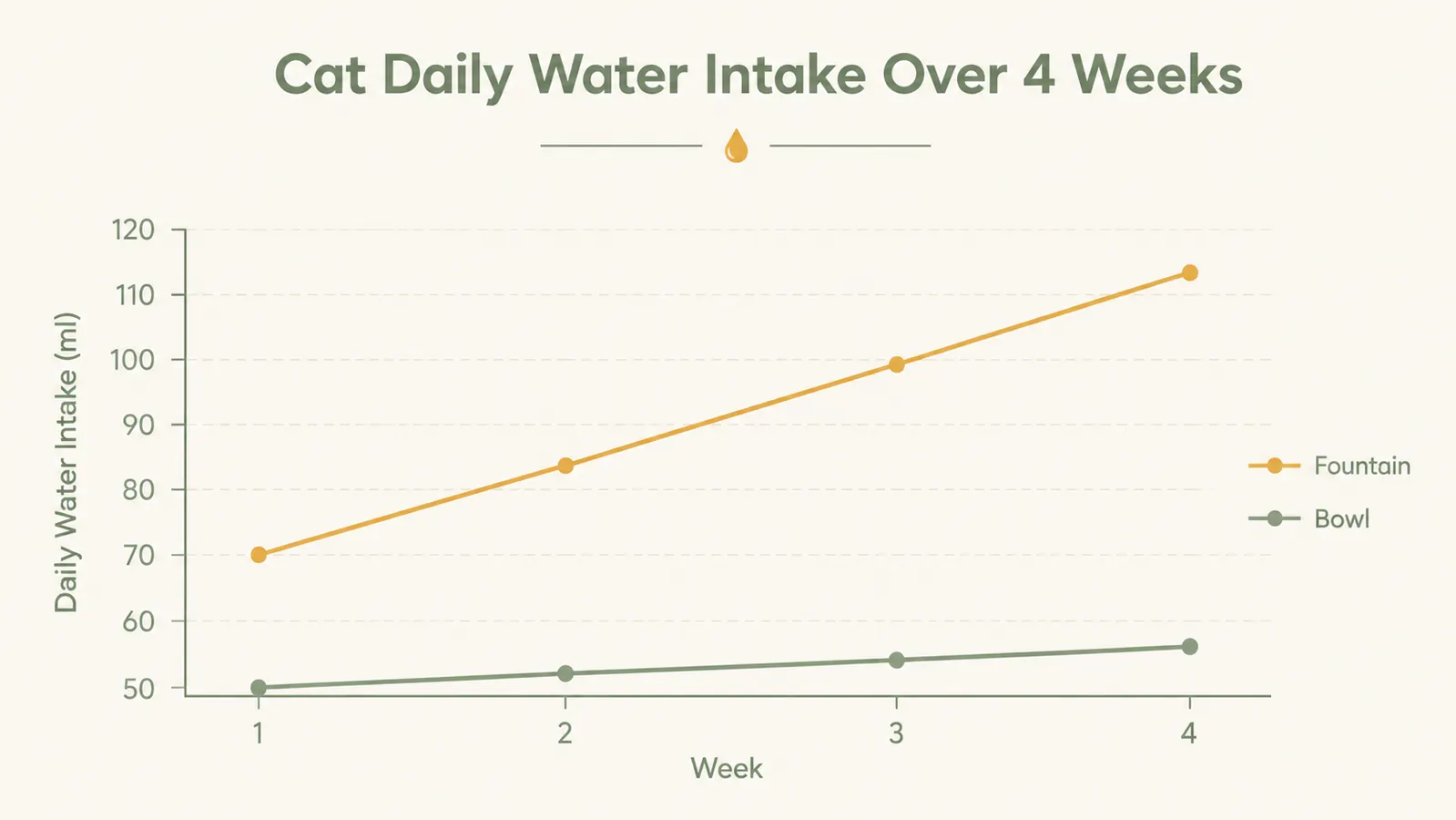
Thistle went from drinking about an ounce a day from her bowl to drinking six or seven times daily from the fountain. The vet noticed the difference at her next checkup without me saying a word.
Step 4: Add Wet Food to Increase Hidden Moisture Intake
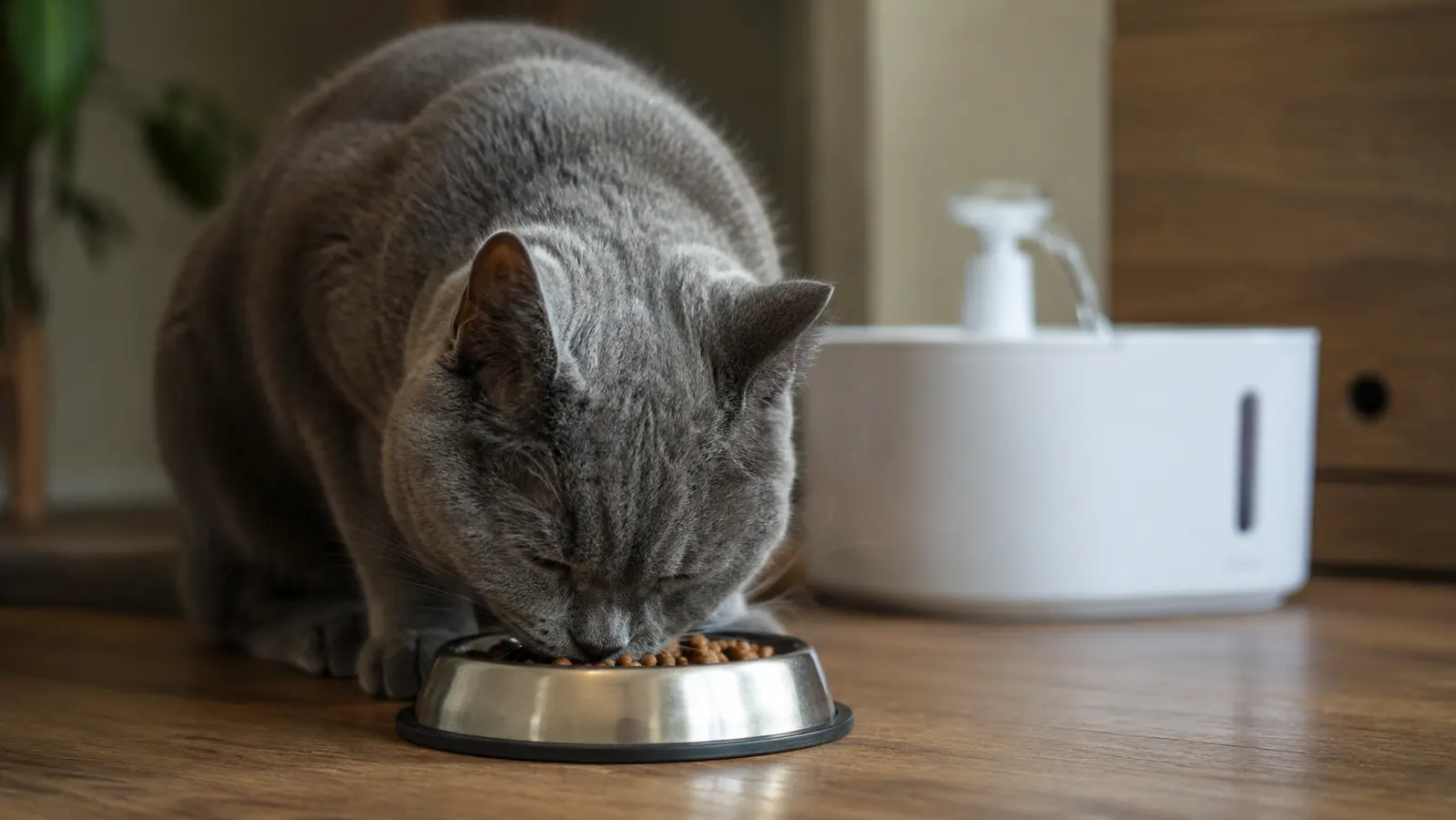
A cat eating dry kibble exclusively is getting roughly ten percent of their water from food. A cat eating wet food is getting somewhere between seventy and eighty percent. If your cat is chronically under-hydrated and you only feed dry food, the fountain alone may not be enough. Adding even one wet food meal per day makes a meaningful difference in total daily water intake.
I switched Thistle to wet food in the morning and kept dry kibble available in the evening. The change was immediate. She still uses the fountain throughout the day, but the baseline hydration from wet food means she is never starting the day already behind. Her coat also improved, which her vet attributed directly to better hydration. If your cat will not touch wet food straight from the can, try warming it for ten seconds in the microwave. The smell intensifies and suddenly it becomes irresistible.
Another option for dry-food-only cats is adding a small amount of low-sodium chicken broth, about a tablespoon, directly to the dry kibble. This adds moisture without requiring a full food transition and most cats find it appealing enough to eat every last piece. Use broth with no onion or garlic listed in the ingredients, as both are toxic to cats.
Step 5: Clean the Fountain on a Real Schedule
This step is where most cat owners undermine all the progress they have made. Cats have a far more acute sense of smell than we do, and a fountain with slime buildup, old food particles in the water, or an overdue filter smells wrong to them. A cat that was drinking happily from a clean fountain will quietly stop using a dirty one, and you will not necessarily notice right away because the water looks fine to you.
With the Veken I do a full disassembly and rinse every ten days, and I replace the carbon filter roughly every four to six weeks depending on how hard our tap water is. The fountain breaks into four simple pieces and the whole cleaning process takes about eight minutes. I run the pump under warm water and scrub it with a bottle brush to keep mineral deposits from building up. The difference in how the fountain smells after cleaning, even when it looked clean before, is always noticeable.
Set a recurring reminder on your phone for fountain cleaning day. It sounds like overkill until you notice your cat has stopped using it and you cannot figure out why. Regular cleaning is the difference between a fountain your cat uses every day and an expensive decoration in the hallway.
What Else Helps
Beyond the five steps above, a handful of smaller adjustments have made a real difference for Thistle specifically. Placing the fountain at floor level near a wall rather than out in the open makes cats feel less exposed while drinking, which matters for anxious cats. Avoiding scented cleaning products near the fountain eliminates smell interference. And if you have a multi-cat household, the general rule is one water source per cat plus one extra. Cats that compete for resources often drink less overall because they feel surveilled at the water station. Spreading fountains around the home removes that social stress entirely. For a deeper look at how circulating water compares to standard bowls in terms of actual hydration data, the comparison in pet water fountain vs bowl breaks it down side by side. If you want to understand why the Veken specifically holds up over months of daily use, the long-term Veken fountain review covers filter life, motor noise, and the cleaning reality in detail.
Ready to stop watching your cat ignore the water bowl every morning?
The Veken 95oz pet fountain is the quietest, easiest-to-clean fountain I have found at this price. It runs 24 hours a day, filters out the taste compounds that put cats off, and holds enough water that you are not refilling it constantly. Over 49,000 cat owners agree it works.
Amazon Check Today's Price on Amazon →