
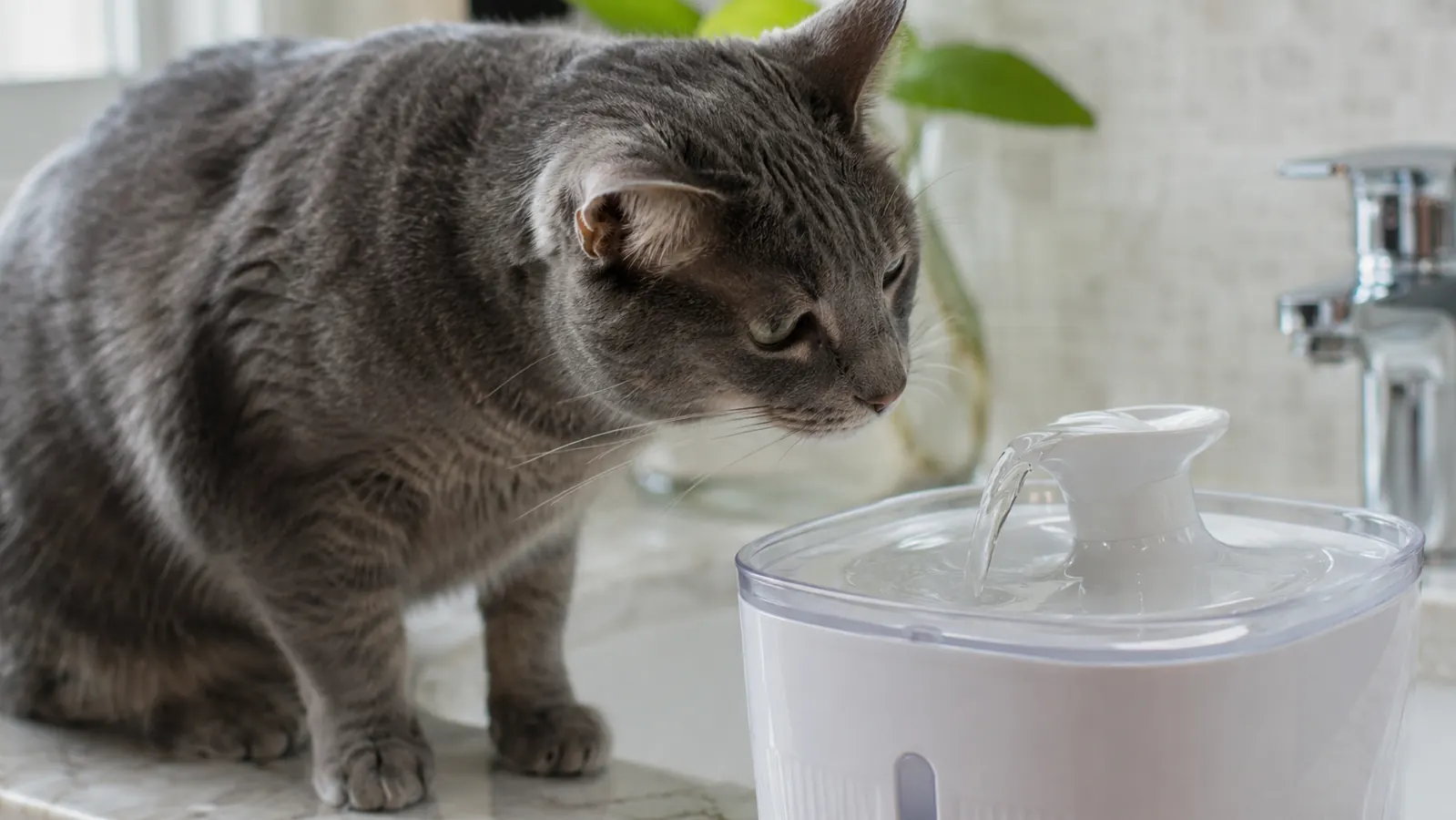
Let me start with the question nobody asks when they see 49,000 ratings and a four-star average on the Veken 95oz Pet Fountain: what did the people who gave it three stars actually experience? Because I know now. I bought one for my cats Biscuit and Gravy (yes, those are real names, and no, I did not name them) after my vet flagged that Gravy, a nine-year-old male tabby, was showing early signs of urinary concentration issues. Her exact words were, 'cats are lazy drinkers and moving water usually fixes it.' So I searched Amazon, saw the Veken at the top with a staggering review count, bought it the same afternoon, and spent the next several months learning exactly what the average five-star reviewer does not bother to mention.
The Veken fountain works. I want to be clear about that upfront. Both cats drink more. Gravy's next urinalysis showed improved hydration markers. The fountain does the one job it exists to do. But there are real annoyances that the listing glosses over and that I wish someone had laid out for me before I plugged it in. This review covers those specifically, because you can get the good news from the 49,000 people who left the praise. I am going to tell you what they left out.
The Quick Verdict
The Veken 95oz fountain is the right call for most cat owners, but the real cost is time and maintenance discipline, not just the sticker price. Go in with open eyes.
Amazon Check Today's Price →Your cat ignores the water bowl and your vet keeps mentioning hydration. Here is the fix that worked for mine.
The Veken 95oz fountain is still one of the most accessible entry points into cat fountain ownership. Ships with three replacement filters and runs quietly when properly maintained. Check today's price and read recent buyer questions before ordering.
Amazon Check Today's Price on Amazon →How I've Used It and What I Was Testing For
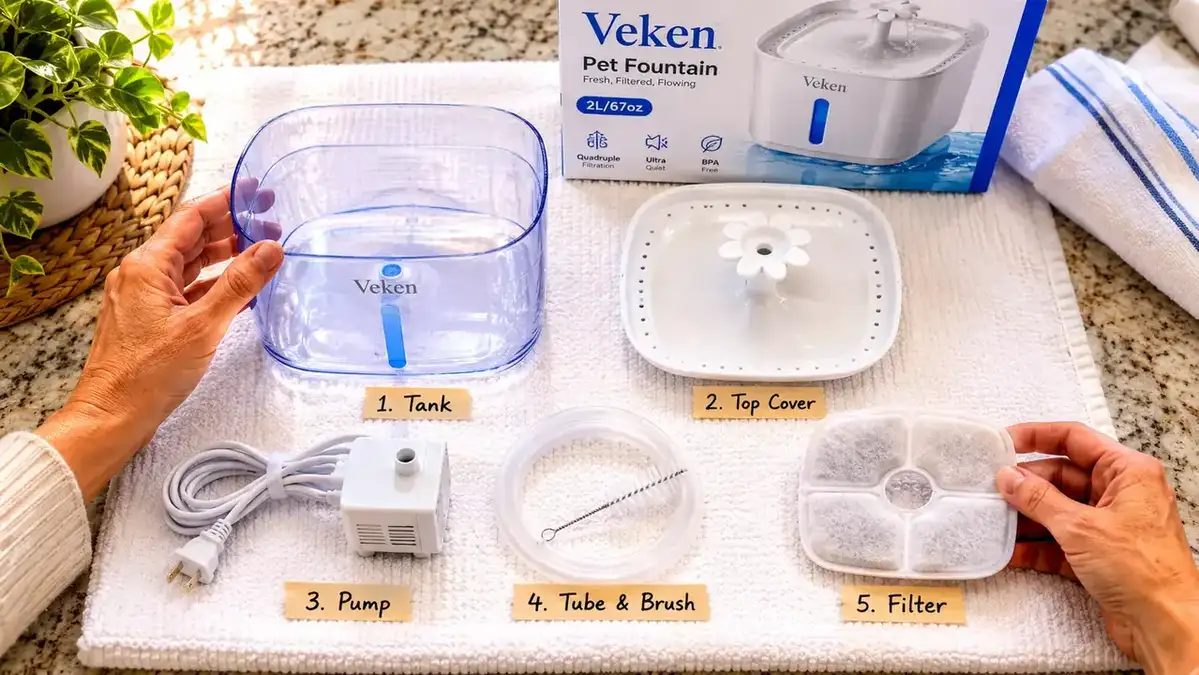
I placed the fountain on the laundry room floor, which is where both cats like to hang out and where their food bowls already live. Setup was straightforward: rinse the parts, soak the filter for a few minutes, clip the pump in, fill the reservoir with filtered tap water, and plug in via USB. Total time was about ten minutes. I then deliberately did not touch it for two weeks so I could see what the cleaning curve actually looked like without intervention. That experiment taught me more about this fountain than anything else I could have done.
Biscuit, a four-year-old tortoiseshell, was at the fountain within six hours. Gravy took three days, which is typical for an older cat who has been drinking still water his entire life. By day five, the ceramic bowl I had been using for years was sitting empty in the corner. The behavior change is real and it happens faster than I expected. That part of the Veken story is completely accurate.
What the listing does not prepare you for is what happens after week two, when the novelty of the thing is gone and maintenance becomes your responsibility. I tracked every cleaning session, every filter change, and every noise event over the course of several months. Here is what I found.
The Cleaning Reality Nobody Puts in the Listing
The Veken listing says the fountain is easy to clean. That is technically true. What it does not say is how often 'easy to clean' actually needs to happen. In my laundry room, which runs warm from the dryer exhaust, I started seeing pink biofilm inside the pump housing and on the lower reservoir walls at the eleven-day mark. That pink slime is Serratia marcescens, a common environmental bacterium that thrives in warm, moist plastic surfaces. It is not dangerous to most cats, but it is absolutely something you do not want your animals drinking near, and it is completely preventable with consistent cleaning.
My cleaning routine now runs every ten days: remove the dome and flower insert, put those in the top rack of the dishwasher, unclip the pump, twist off the impeller cap, scrub the pump housing with the small brush that ships with the fountain, rinse with warm water, wipe down the reservoir base with a sponge dampened in white vinegar solution, and reassemble. The whole process takes about twelve minutes once you know the steps. The first three times it took closer to twenty because I was figuring out the impeller orientation and the right way to seat the pump clip. There is no diagram in the box for this. I watched a YouTube video.
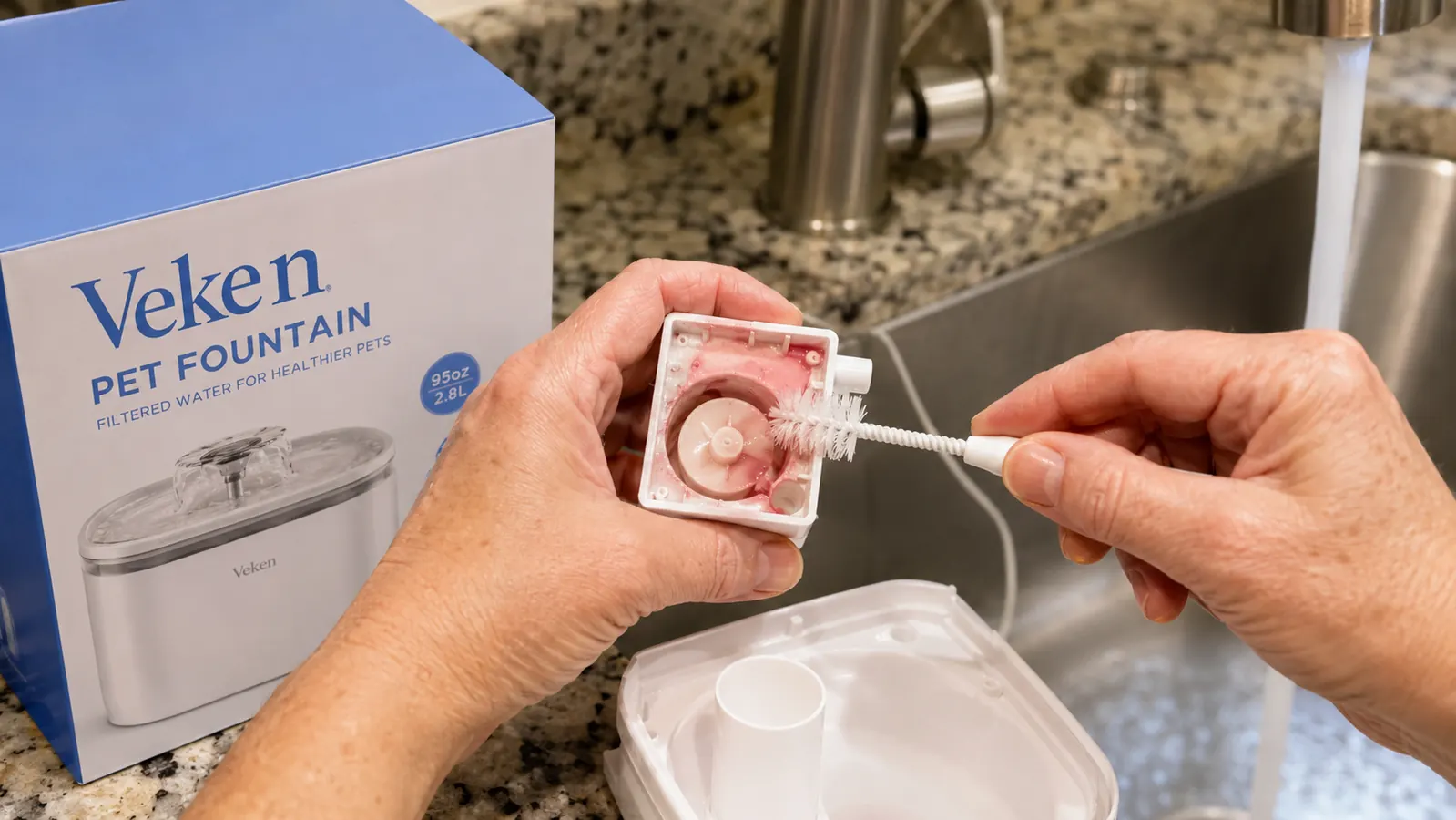
If you keep up with the cleaning schedule, the fountain stays genuinely clean and both animals benefit. If you slip past two weeks, the biofilm accelerates fast and you will spend twice as long on the next scrub breaking down the buildup. I skipped one cleaning cycle during a busy travel week and came back to a fountain that smelled like a gym locker. That is on me, not on the product, but I want you to understand that this fountain requires an owner who will actually commit to the schedule. It is not a set-it-and-forget-it appliance.
Pump Noise: When It Is Fine and When It Is Not
The one-star reviews about noise are almost universally from people whose pump started loud and stayed loud. When I dug into the pattern, the cause is almost always the same: the fountain ran low on water and the pump ran dry or near-dry for an extended period. A dry impeller scores itself. Once scored, it vibrates against the housing wall at a frequency that carries through the plastic and into whatever surface the fountain is sitting on. You cannot sand that smooth again. The pump that noise-complaint owners describe is a broken pump, and it broke because nobody refilled the reservoir in time.
When properly filled, the Veken is genuinely quiet. I placed a decibel meter app on my phone eight inches from the running fountain at full water level and measured around 38 to 40 decibels, roughly the level of a quiet conversation in an empty room. That is soft enough to coexist with sleep if you choose to put the fountain in a bedroom. The gurgling water sound is more audible than the motor, and some people find it pleasant. What I can tell you is that at night, in a quiet house, you will hear the fountain from about six feet away. Not annoyingly. Just perceptibly.
The noise changes the moment the water level drops below the pump intake line, which happens faster than you expect with two cats drinking regularly. I got into the habit of checking the reservoir every other morning. On a silicone mat, with a full reservoir, the motor is nearly silent. Off a mat, on tile, at low water, it hums and vibrates in a way that travels across the floor and up through furniture legs. Place it thoughtfully and keep it topped up and you will have none of the noise complaints from the one-star reviews.
Gravy's next urinalysis showed improved hydration markers. My vet said, 'whatever you changed, keep doing it.' That one sentence justified the entire purchase.
Filter Costs: The Real Ongoing Expense
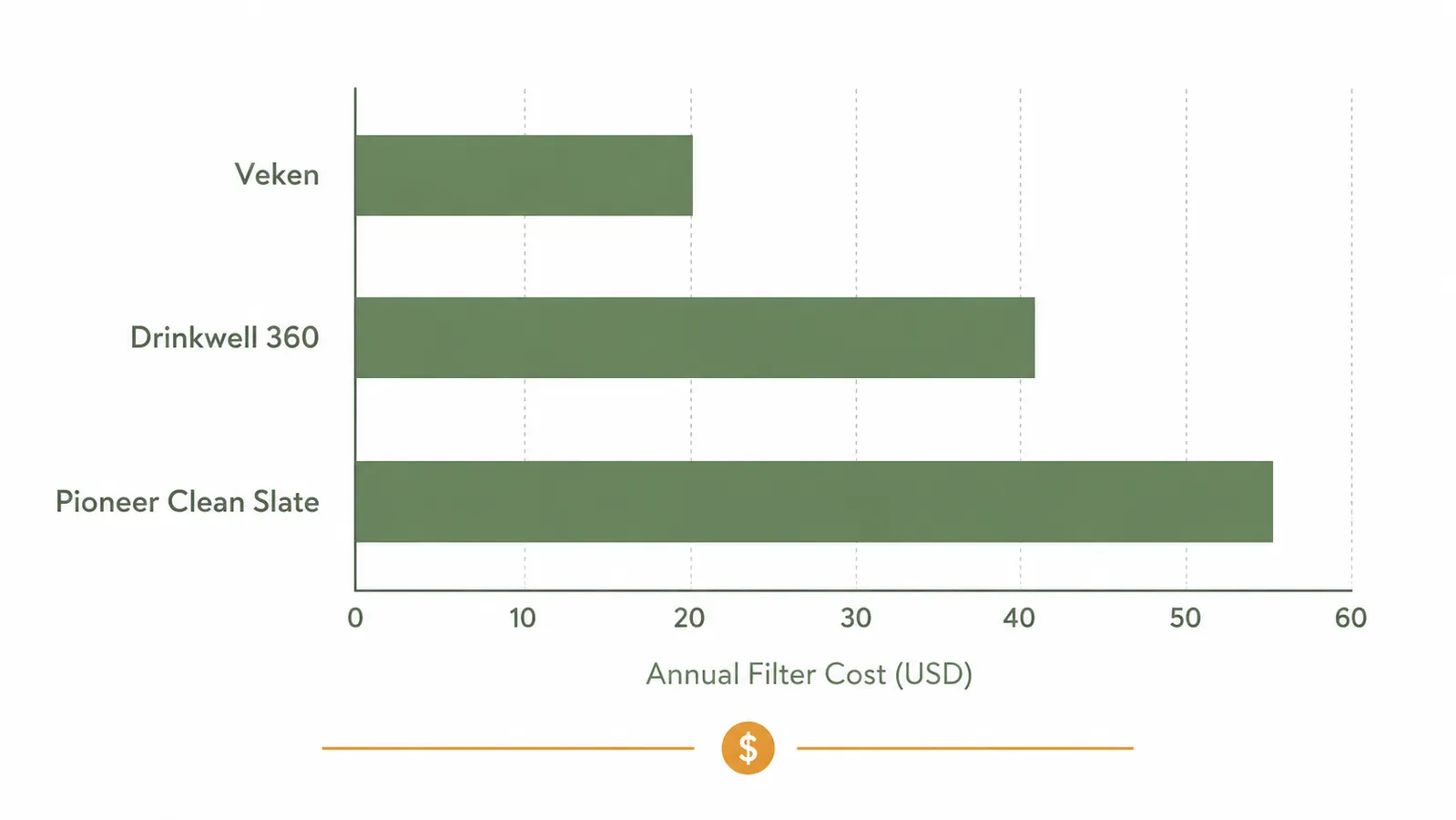
The Veken ships with three carbon replacement filters. The listing suggests changing them monthly. In practice, with two cats and filtered tap water, I replace mine every three to four weeks. With hard tap water or more than two animals, you may find yourself changing filters closer to every three weeks because the mineral loading shortens the active carbon life. At roughly two dollars per filter when bought in a twelve-pack, the annual cost runs between twenty-four and thirty-six dollars depending on your change frequency. That is cheap. It is also a recurring expense that is invisible at the point of purchase, and I have seen people complain about 'hidden costs' that are actually just described on the product page if you read past the title.
What matters more than the cost is the consequence of skipping a filter change. A carbon filter that has been running for six or eight weeks is no longer filtering anything. The carbon is saturated. At that point, the filter is just a piece of foam sitting in the water flow, and any debris it has captured is sitting right there in the water your cat is drinking. I keep an eight-pack in the cabinet and change on a calendar reminder. The ongoing cost is genuinely low. The risk of ignoring the schedule is not.
Algae and Biofilm: What the Five-Star Reviews Skip
Algae growth is the less-discussed cousin of the biofilm problem. Algae needs two things: moisture and light. If your fountain sits in a spot where it gets direct sunlight for part of the day, you will see green algae begin developing on the interior walls faster than the biofilm. I positioned mine against a laundry room wall with no direct sun exposure and saw no algae in several months. When I temporarily moved it to the kitchen windowsill during a plumbing repair and left it there for a week, the reservoir base had visible green tinting by day seven.
The lesson: placement matters more than the cleaning schedule for algae prevention. Keep the fountain out of direct light and you likely will not deal with it. Put it on a sunny floor or near a window and algae will become a regular part of your cleaning routine. The Veken is white plastic, which shows every trace of both algae and biofilm, so you will always know when cleaning is overdue. Whether you consider that a feature or a flaw probably depends on your personality. I consider it useful. It functions as a visible maintenance reminder.
How It Compares to Budget Alternatives
The Veken's main competition at this price range is the PetSafe Drinkwell 360 and the Pioneer Pet Raindrop. The Drinkwell 360 uses a proprietary filter that costs more per unit but lasts slightly longer, and its stainless steel top ring makes it easier to wipe down between full cleans. The Pioneer Raindrop is all-stainless, which resists biofilm dramatically better than any plastic surface, but it costs roughly three to four times as much as the Veken and its pump has a more audible hum at baseline. For a first-time fountain owner who wants to test whether their cat will use moving water before committing serious money, the Veken is the right call. For a cat with chronic kidney disease whose hydration is a medical issue rather than a preference issue, I would seriously consider stepping up to a ceramic or stainless model that is inherently easier to keep sterile.
I have also seen comparisons to the Petkit Eversweet, which adds a UV sterilization lamp in the reservoir to suppress bacteria between cleanings. If biofilm anxiety is your main concern and you are willing to pay for a solution rather than a schedule, that model addresses the problem at the source. The Veken does not. The Veken requires you to be the solution, on a consistent ten-day cadence. If that fits your lifestyle, it is genuinely one of the best values in the category. If it does not fit your lifestyle, buying a more expensive self-cleaning unit is not being wasteful. It is being realistic.
What I Liked
- Both cats increased their daily water intake measurably and quickly, within the first week
- Quiet enough for light sleepers when the reservoir is properly maintained at full level
- 95oz holds enough water for two average cats for two to three days between refills
- Replacement filters cost about two dollars each in bulk, making the ongoing expense very low
- Three filter modes built into the flower design accommodate cats with different drinking preferences
- BPA-free plastic held up without cracking or warping under consistent use
- Excellent entry-level price point for testing whether your cat responds to moving water
Where It Falls Short
- Requires a full disassembly scrub every ten days or biofilm appears faster than expected
- Pump noise increases sharply when the water level drops low, requiring consistent refill habits
- No automatic shutoff when reservoir runs dry, so the pump can score its own impeller if neglected
- Plastic surface is more biofilm-prone than ceramic or stainless steel alternatives
- Algae develops quickly if the fountain receives any direct sunlight during the day
- No pump diagram in the box; first-time owners will need to search online for disassembly help
Who This Is For
The Veken fountain is the right purchase for cat owners who want to encourage hydration in a cat who ignores still water, who are willing to build a light but consistent maintenance habit around it, and who do not need a medical-grade solution. It is also perfect for someone who has never owned a fountain and wants to test the concept at low financial risk before deciding whether to step up to a more expensive ceramic or stainless model. If you have one or two cats, a consistent schedule, and a placement spot away from direct sunlight, this fountain will almost certainly work exactly as advertised.
Who Should Skip It
If you travel regularly and cannot guarantee someone will refill and check the fountain every two to three days, the Veken is not the right match. A dry pump is a loud, damaged pump, and there is no safety shutoff to protect it. If you have a cat with severe chronic kidney disease whose hydration is a medical necessity rather than a wellness preference, the biofilm potential in a plastic fountain is worth taking seriously, and a ceramic or UV-equipped model deserves the extra investment. And if you are genuinely not going to commit to a biweekly cleaning routine, the honest advice is either to buy a stainless fountain with fewer crevices, or to stick with a fresh water bowl changed twice a day, which at least has no hidden surfaces for biofilm to colonize.
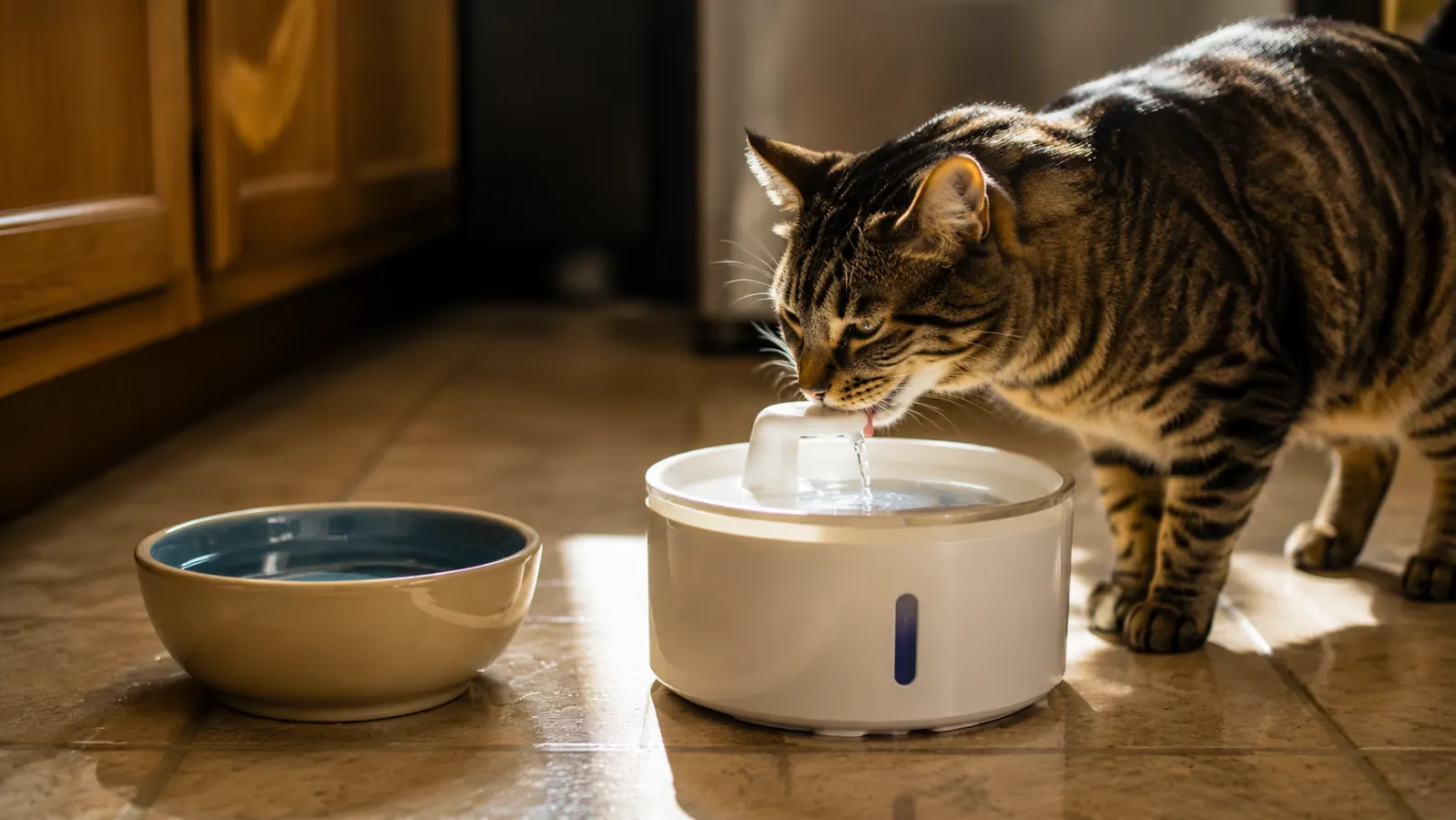
If you go in knowing the maintenance schedule, the Veken delivers. Here is where to check today's price.
The Veken 95oz fountain includes three replacement filters, works for one or two cats, and ships fast. Read the current buyer questions and check today's price on Amazon before deciding. Most cat owners who stick to the cleaning routine are still running theirs a year later.
Amazon Check Today's Price on Amazon →