
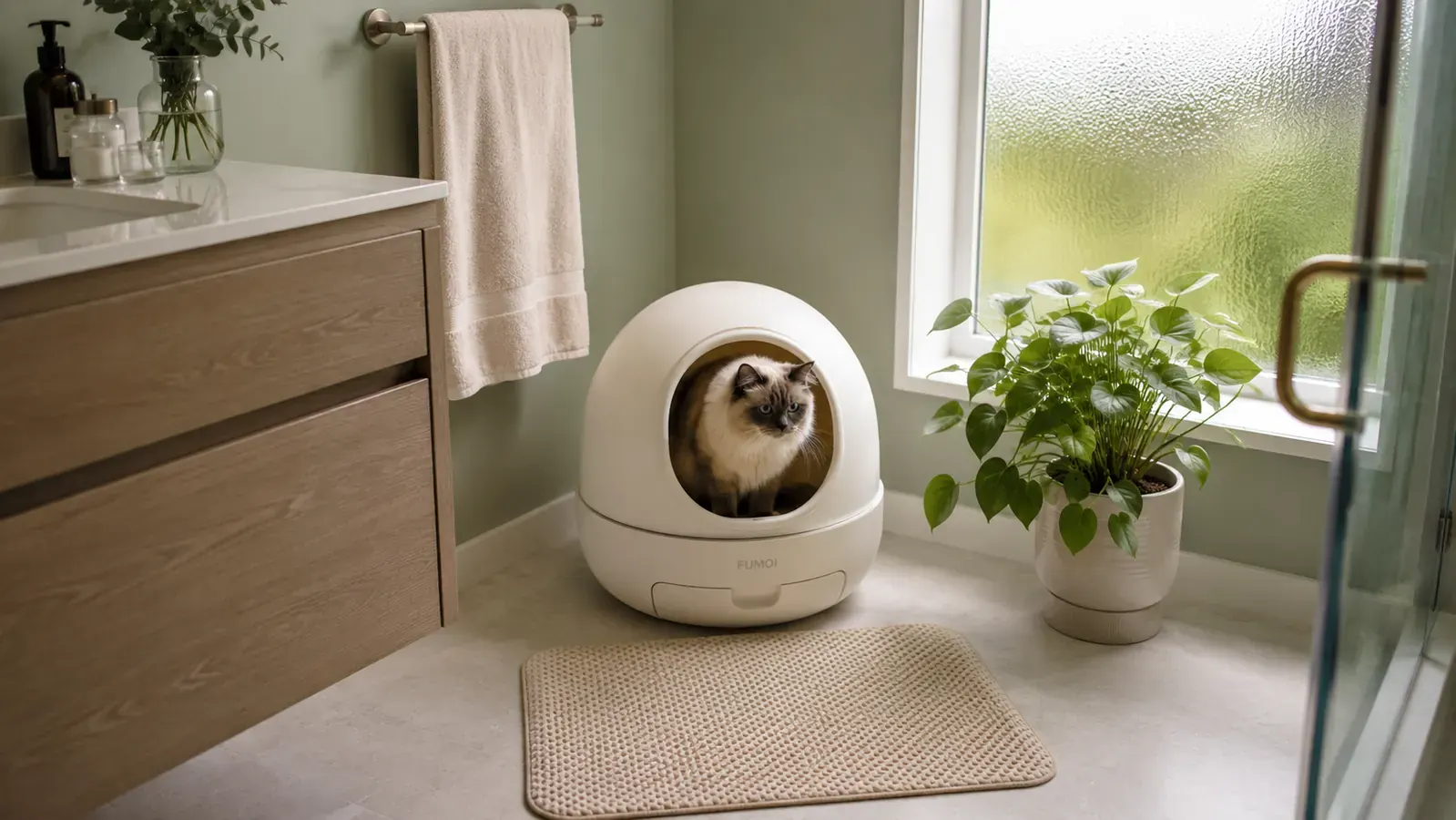
My two cats, Marigold and Biscuit, have been using the Fumoi automatic self-cleaning litter box every single day for three months now. Before that, I was scooping twice a day without fail, seven days a week, because one of those cats is what polite people call prolific and what I call a biological disaster. I had tried one other self-cleaning box before this one and it jammed inside the first two weeks, ended up in a closet, and I went back to scooping. So when I ordered the Fumoi, I was skeptical. Three months in, I can tell you it has not ended up in any closet. But I want to be honest with you the way a neighbor would be, not the way a product listing would be, so here is the full picture of what the Fumoi does well, where it falls short, and who it is and is not built for.
The Quick Verdict
The Fumoi delivers on its core promise for one- and two-cat homes, but you have to commit to clumping litter and accept a modest ongoing liner cost.
Amazon Check Today's Price →Done scooping twice a day? The Fumoi is the box I actually kept.
Three months, two cats, one jam that cleared itself. Check current pricing and availability on Amazon before the next stock gap.
Amazon Check Today's Price on Amazon →How I've Used It
I set the Fumoi up in the corner of my laundry room in late March. Marigold is a four-year-old female tortoiseshell, about nine pounds, with no known health issues. Biscuit is a six-year-old male tuxedo, about twelve pounds, and his vet has told me more than once that he is eating too much. Two cats with different sizes, different use frequencies, and different litter preferences made this feel like a real test rather than a controlled showcase.
I switched both cats to a mid-grade clumping litter when I introduced the Fumoi, because the unit requires clumping litter to function. I used the transition period the manual describes: I set it to manual-only mode for the first three days so the globe rotation would not startle them on first encounter. By day four, both cats had claimed it as their own and were using it without hesitation. I then set the auto-clean timer to run four minutes after each detected exit, which the manual recommends as a starting point for two-cat homes. That cadence has not changed in three months.
Setup itself took about twenty minutes from unboxing to first cycle, which is longer than some competitors but not frustrating. The physical assembly is mostly snapping the globe halves together and seating the liner drawer. The app pairing was the part that required patience: I had to toggle my phone to my 2.4 GHz Wi-Fi network before the Fumoi would complete its pairing handshake, which is a common quirk with smart home devices but not one the quick-start guide flags clearly. Once paired, the connection has been stable.
Odor Control: The Part That Actually Matters
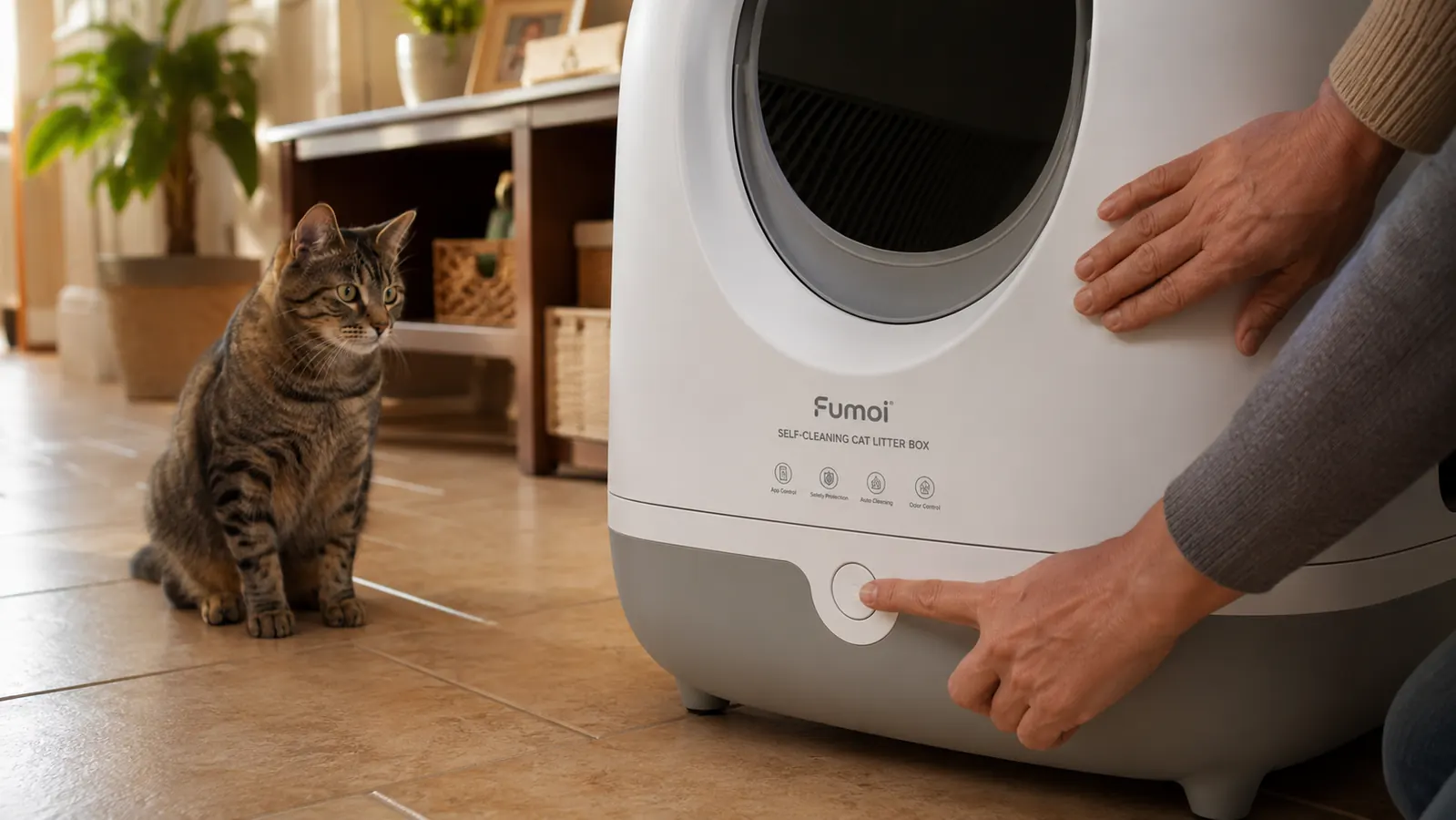
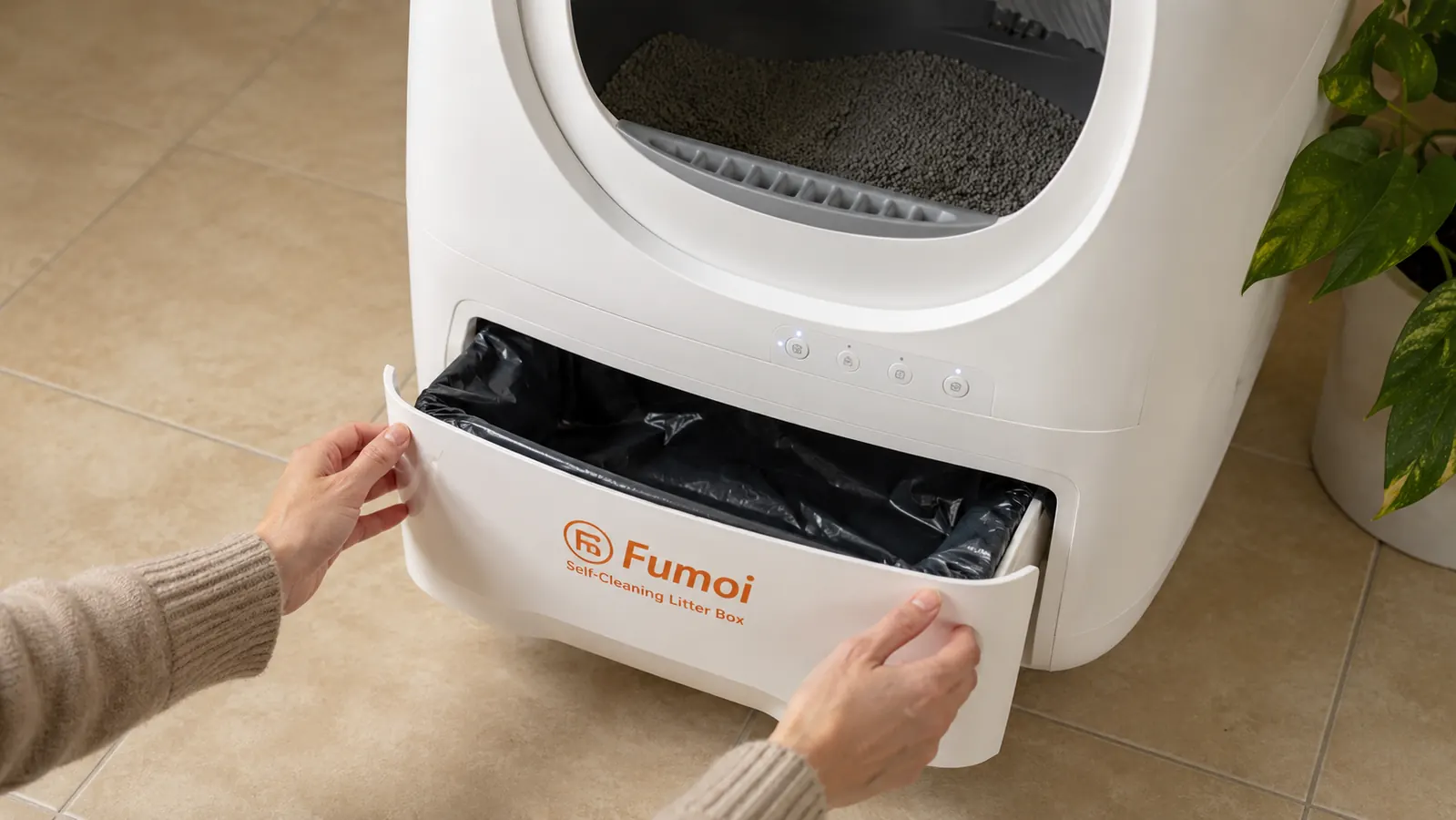
Before the Fumoi, the laundry room had a smell I had normalized so thoroughly that guests would mention it and I would shrug. Within the first week of using the Fumoi, that smell was largely gone. Within two weeks, the room smelled like a laundry room again, which is the highest praise I can give any litter box. The sealed globe design is why. Clumps get raked into a bottom waste drawer lined with a carbon-filter bag after every use, and the globe closes back up after cycling. There is almost no open-air exposure between deposits, which is where conventional boxes and even some open-grate automatics lose the odor battle.
What the Fumoi does not fix: if a cat has an unusually soft or loose deposit, the rake can push waste instead of raking it cleanly into the drawer, and a thin film of residue stays on the inner globe surface. This happened roughly six or seven times over three months, almost always with Biscuit. Each time I had to open the globe, wipe the inner surface with an unscented pet-safe cleaner, and run a manual cycle. It is a five-minute task and not a disaster, but you should know the self-cleaning claim is not fully hands-off for every single use event. Cats with consistently firm stools will have a much smoother experience than cats who sometimes do not.
Within two weeks the laundry room smelled like a laundry room again. That is the highest praise I can give any litter box.
The Jam Question: What Actually Happened Over Three Months
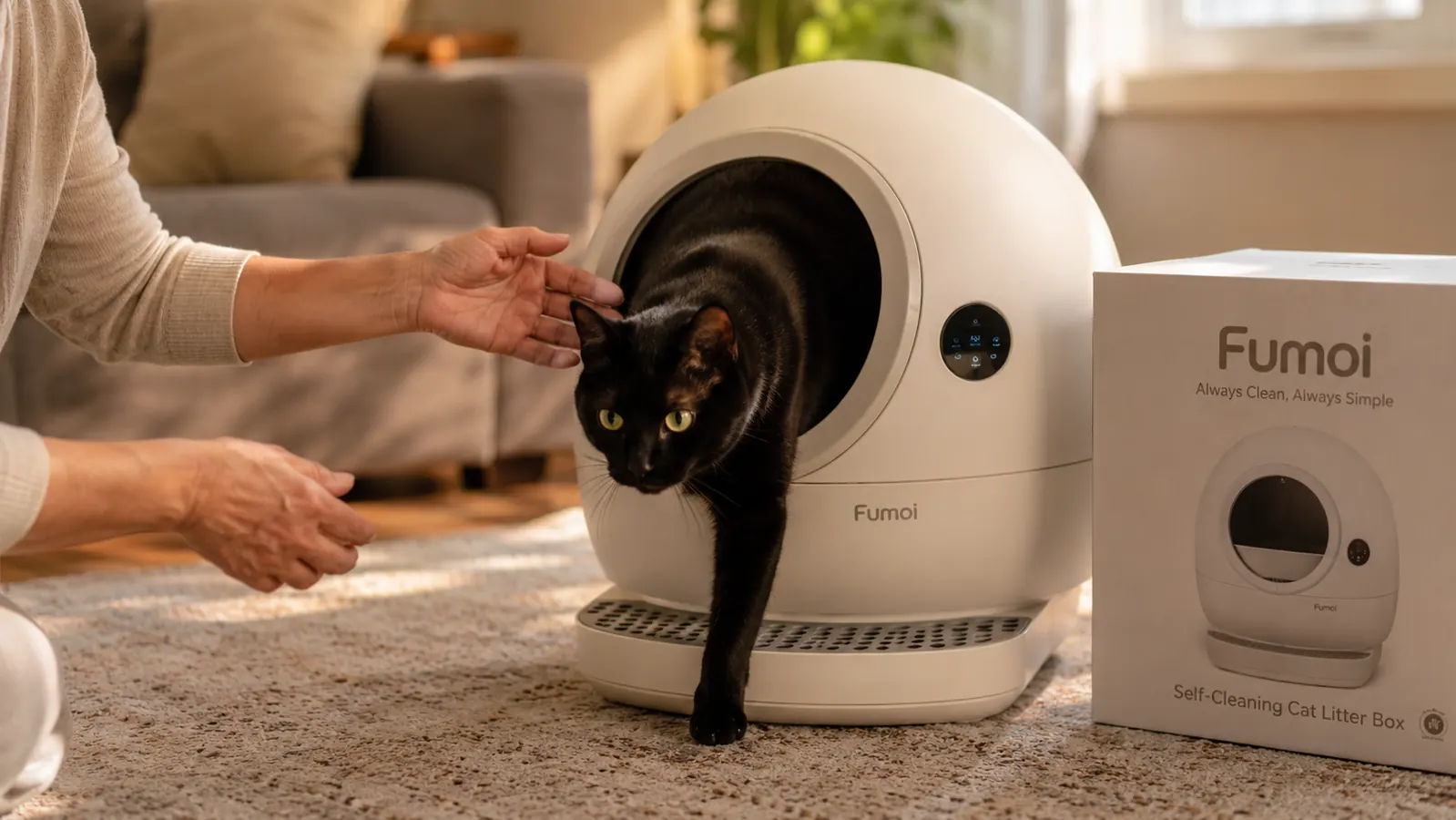
My first automatic litter box jammed constantly, which soured me on the whole category. That experience made jam rate my primary metric for any self-cleaning unit. In three full months of daily use with two cats, the Fumoi jammed twice. The first time was in week two, when I had slightly overfilled the litter above the indicated fill line and a large clump caught the sensor strip during globe rotation. The unit beeped, paused, reversed course, and sent an alert to my phone. I opened the globe, broke up the oversize clump by hand, and it cycled fine. From that point I filled litter to exactly the indicator line and it has not jammed since.
The second jam was in week six, when I was a day late replacing the liner bag and the drawer was at capacity. The unit detected it and refused to cycle, which is the correct behavior. It was protecting itself from an overfill rather than cramming waste somewhere it should not go. I swapped the bag, pressed the button, and it ran a full cycle immediately. Neither jam required me to disassemble anything, reset the unit, or contact customer support. That is meaningfully better behavior than the box I had before, and for a lot of buyers those two experiences will be the whole story.
App and Connectivity: Reliable Enough to Stop Thinking About It
The Fumoi app is not going to win any design awards, but it does the job. I receive a push notification when either cat uses the box, a notification when the drawer needs emptying, and a notification if the unit detects an error condition. Over three months I had three connectivity drops, all of them on days when my home Wi-Fi went out for unrelated reasons. When the unit loses its connection it defaults to its programmed auto-clean schedule rather than stopping entirely, which is the right design choice for a device that runs while you sleep or while you are at work. When Wi-Fi came back, the unit reconnected automatically without any input from me.
One thing worth flagging: the weight sensor occasionally logs a use event when a cat steps on or near the unit without entering the globe. I see one or two phantom entries per week in the app history. They do not trigger a cleaning cycle, they just appear in the log. If you are tracking litter box use frequency as a health signal, which some cat owners do as an early kidney or UTI indicator, those phantom readings mean the data is not reliable to within one use per day. That is a real limitation for health-monitoring purposes, though it has no practical effect on the unit's cleaning function.
Total Cost Over Three Months: The Number Nobody Puts in the Listing
The Fumoi is the biggest upfront spend. Beyond that, I used one carbon-filter liner bag every twelve to fourteen days with two moderately active cats. Sourcing compatible bags in a multi-pack brought the cost down to budget-friendly per month in consumables. The clumping litter I switched to is moderately priced a month for two cats at my volumes. So the monthly operating cost beyond the initial purchase has averaged in the low-to-mid range. That is roughly comparable to what I spent on litter before, with the liner cost added. Whether that trade-off makes sense depends on how you value the time and mental overhead you are giving up.
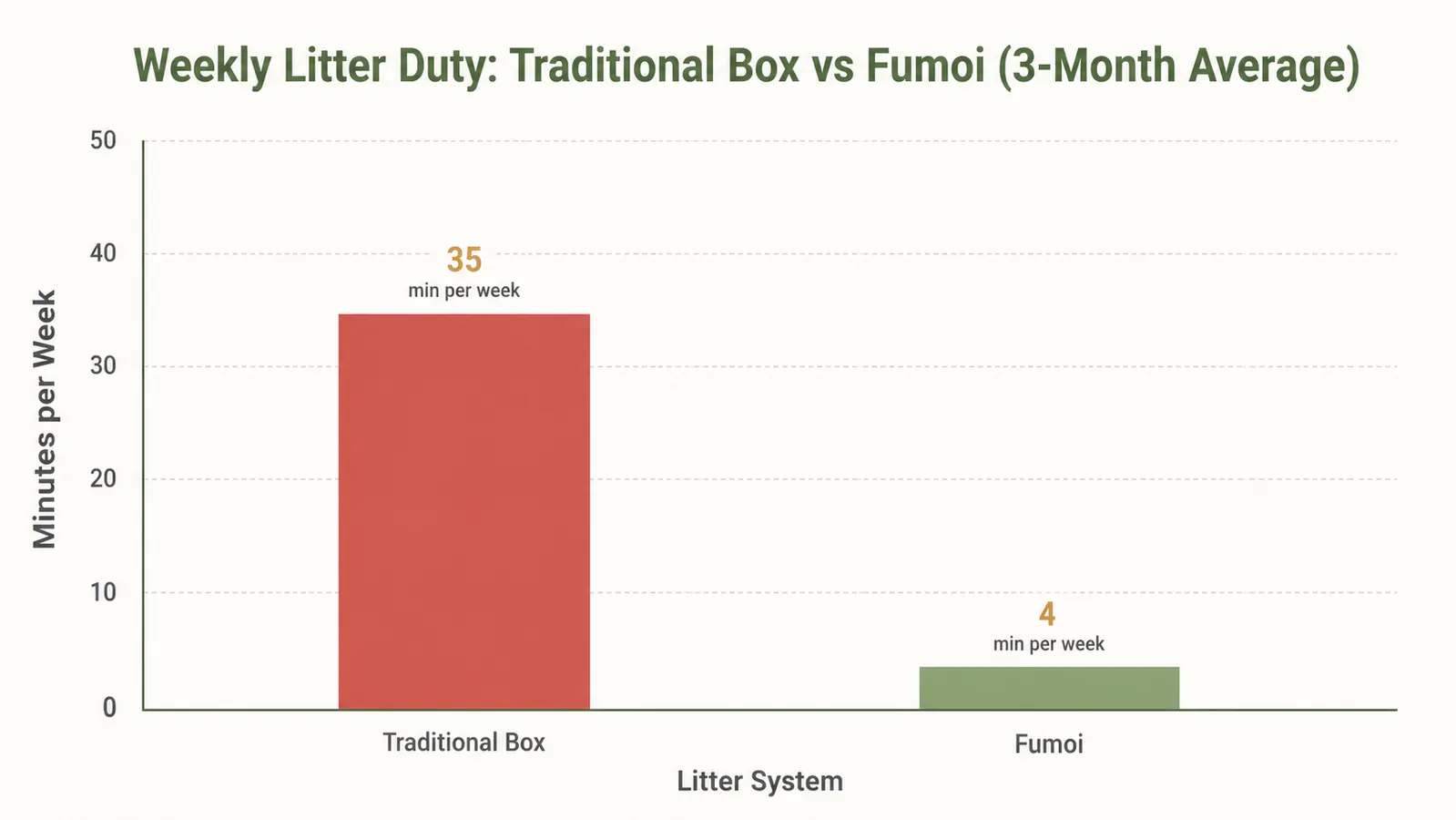
The time savings are real and, for me, were the point. I was spending about five minutes scooping twice a day, which works out to roughly thirty-five minutes per week on litter duty. Now I spend three to four minutes per week total: a quick drawer swap every twelve days and the occasional wipe-down. Over the three-month review period I have recovered something close to six hours of time that I used to spend with a scoop in my hand. That is not abstract. It is six real hours.
How the Fumoi Compares to a Traditional Box Over Time
For a deeper breakdown of the cost math and convenience tradeoffs between the Fumoi and a standard scooping setup, I put together a full side-by-side in our self-cleaning litter box vs traditional box comparison. The short version is that the Fumoi wins decisively on odor and time at one or two cats, and loses ground on cost-per-month once you hit three cats or more. If you are still on the fence about whether any self-cleaning box is worth the investment, the 10 reasons cat owners say self-cleaning boxes change their routine piece covers the cases where it makes the most sense.
Who This Is For
The Fumoi makes the most sense if you have one or two cats, you are already using or willing to switch to clumping litter, and odor control is your primary frustration with your current setup. It is also a strong fit for people who travel regularly. The sealed design and automated drawer-full alerts mean you can leave for a three-day weekend without the litter situation deteriorating in your absence. A neighbor checking in no longer needs to touch the litter box at all, which is a genuine quality-of-life change for both you and whoever you have checking on your cats.
Who Should Skip It
If you have three or more cats, the drawer fills faster than the specs suggest and you may find yourself doing daily bag swaps, which undercuts the whole convenience argument. If your cats currently use non-clumping, crystal, or pine pellet litter, the Fumoi will not work without a litter change, and some cats will refuse a litter switch no matter what you try. I would also skip this unit if your cat is on the large side, over fourteen or fifteen pounds, because the globe opening is sized for average adult cats and a very broad-shouldered animal may feel cramped and choose the corner of your bathroom floor instead.
What I Liked
- Genuinely eliminates daily scooping for one- and two-cat homes
- Sealed globe design controls odor far better than any open-top automatic box
- App connectivity is stable and the drawer-full alert actually fires reliably
- Jam rate was very low once I learned the correct litter fill line
- Quiet enough to run in a bedroom-adjacent space without waking anyone
- Unit defaults to its programmed schedule during Wi-Fi outages rather than stopping
Where It Falls Short
- Ongoing liner cost adds roughly nine dollars per month on top of regular litter
- Requires clumping litter only, which may mean a litter transition your cat resists
- Soft or messy waste occasionally smears on the globe interior rather than raking clean
- Weight sensor logs occasional phantom events that skew use-frequency health tracking
- Globe opening may feel tight for cats over 14 pounds
- App setup requires manual 2.4 GHz Wi-Fi switch that the quick-start guide does not mention
If daily scooping is the tax you pay for owning cats, the Fumoi cuts that bill by about 90%.
Three months in, both my cats use it without hesitation and my laundry room smells like a laundry room again. Check current pricing and stock on Amazon.
Amazon Check Today's Price on Amazon →