
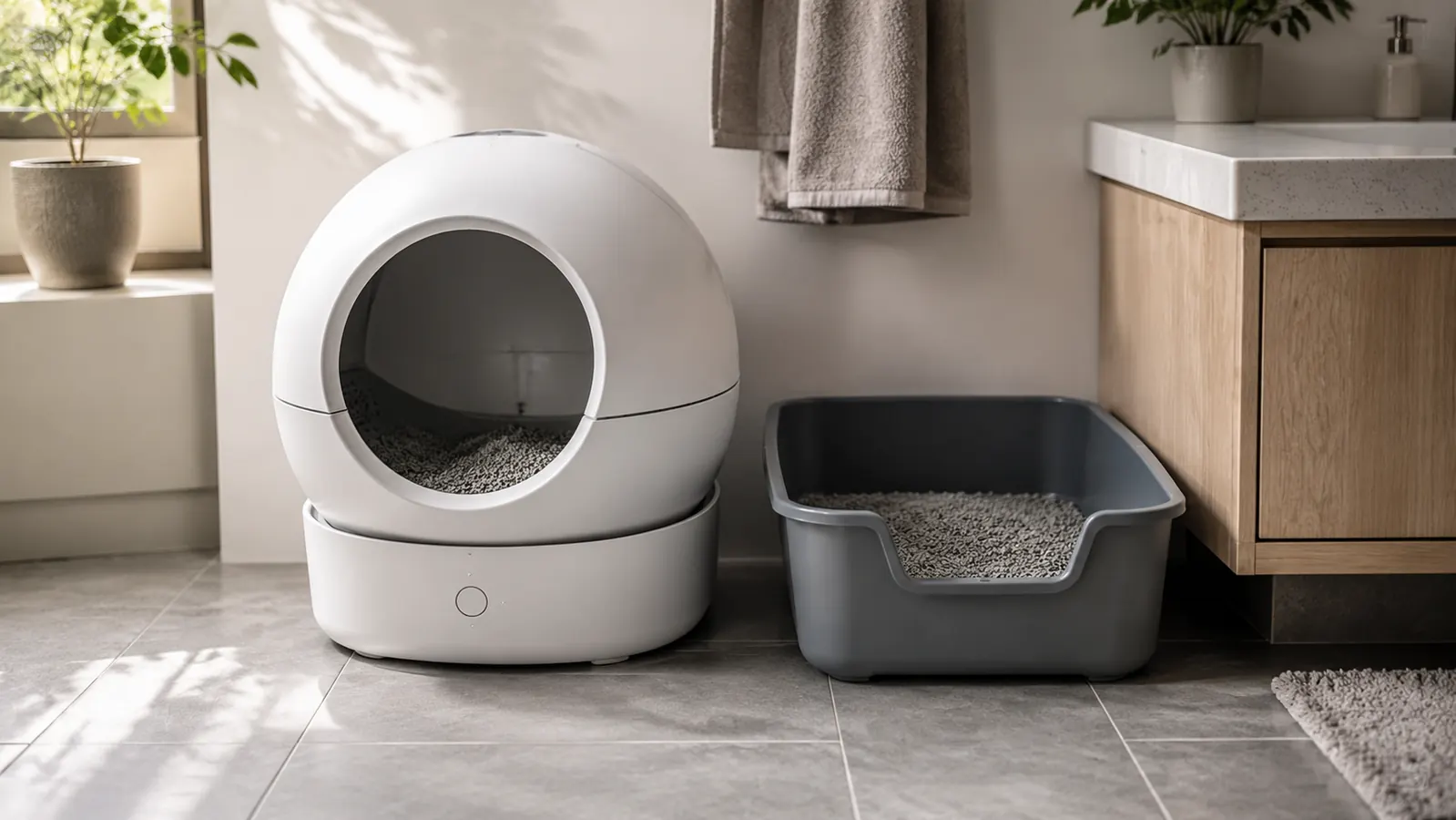
Here is the question I get asked more than any other from cat owners in my circle: is a self-cleaning litter box actually worth the money, or is it one of those gadgets that sounds great in theory and collects dust after six weeks? I bought the Fumoi Automatic Self-Cleaning Litter Box to find out, and I ran it alongside my old standby open plastic box for three months in the same house with the same two cats, Biscuit (a 9-year-old tabby, 11 lbs) and Pepper (a 3-year-old tuxedo, 9 lbs). I tracked time spent on maintenance, tracked litter usage by weight, tracked my general stress level, and I am ready to give you a direct answer with real numbers behind it.
The short version: if you have more than one cat, scoop at least once a day out of necessity rather than preference, and hate the smell that builds up between scoopings, the Fumoi is not a luxury purchase. It is a math problem that tips in its favor faster than most people expect. If you have one low-maintenance cat and a consistent scooping habit, a good traditional box is genuinely hard to beat on value. Read through the comparison below and you can make the call yourself.
| Self-Cleaning Litter Box | Traditional Box | |
|---|---|---|
| Upfront Cost | Check today's price on Amazon | Budget-friendly to moderate depending on style and size |
| Daily Hands-On Time | 2-3 min every 1-2 weeks (waste drawer emptying only) | 10-15 min daily (scoop once or twice per day) |
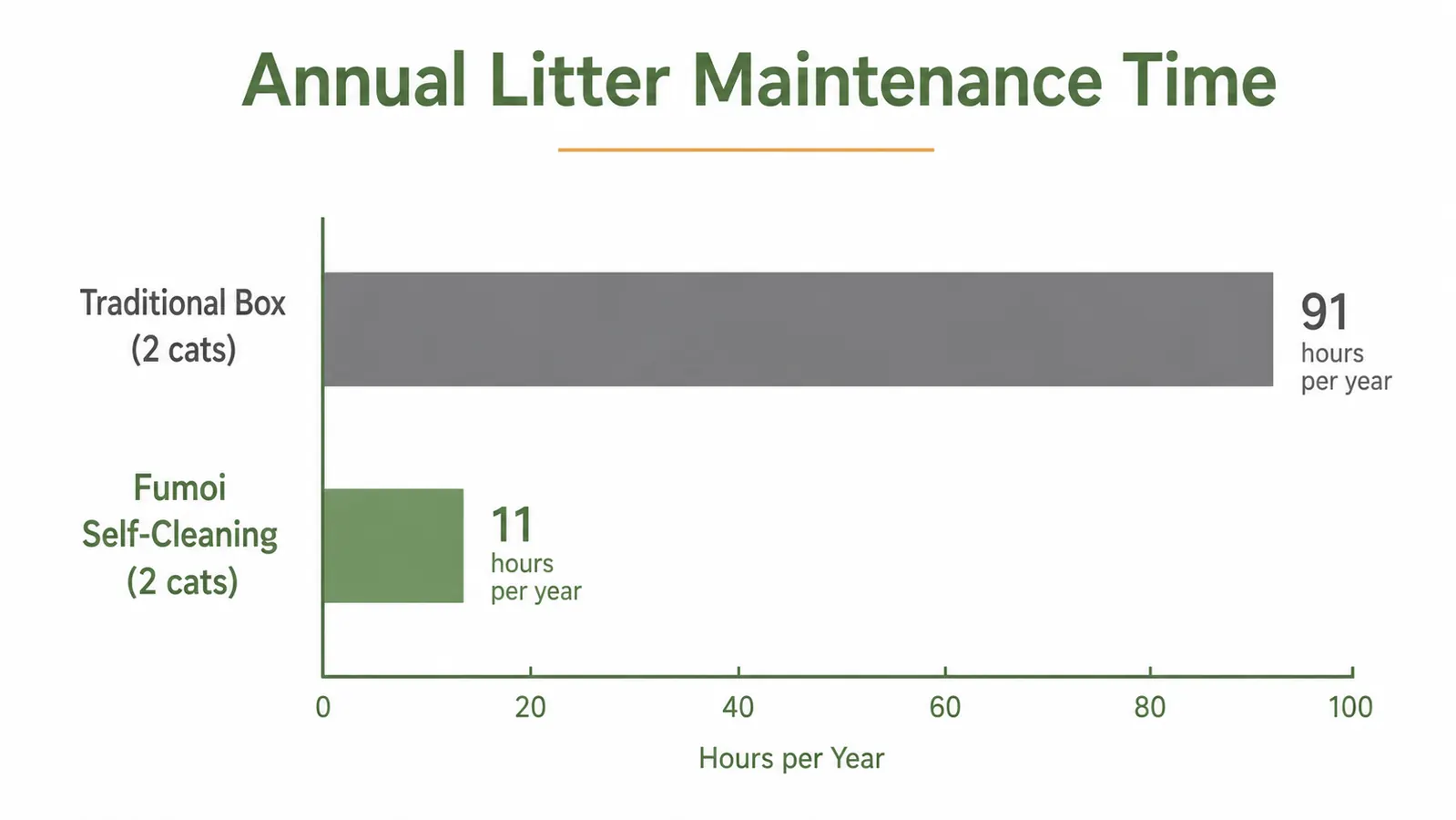
| Annual Time Spent (2 cats) | Approx. 11 hours per year | Approx. 91 hours per year |
| Odor Control Between Cleanings | Minimal: auto-rakes 30 min after each use, sealed waste drawer | Noticeable odor builds after 8-12 hours if not scooped |
| Litter Type Compatibility | Clumping litter only (clay or tofu clumping); non-clumping jams the rake | Any type: clumping, non-clumping, crystal, wheat, paper pellets |
| App and Health Monitoring | Wi-Fi app logs per-use visits, weight range, waste drawer fill level, jam alerts | No app or health monitoring; fully passive |
| Power Requirement | Requires wall outlet (AC adapter included); no battery backup option | None required |
| Mechanical Failure Risk | Occasional rake jams with oversized clumps; clears in under a minute | Zero; nothing to jam or break |
| Cat Acceptance Curve | Takes 3-14 days for most cats; some hesitate at motor sound initially | Immediate; cats know open boxes instinctively |
Where the Fumoi Self-Cleaning Box Wins
The biggest win is time, and that advantage compounds if you have multiple cats. With Biscuit and Pepper sharing two boxes, my old routine was two scoopings a day, seven days a week. I actually timed myself over a full month: averaging 12 minutes per session, that worked out to just under 91 hours of scooping over a full year. After switching the second box to the Fumoi, I dropped to one quick maintenance check every 10 to 14 days to pull out the waste drawer, rinse it under the sink, and reset it. At that rhythm, the annual time cost fell to roughly 11 hours. That is not a rounding error. That is 80 hours of your life handed back to you.
Odor control is the second serious win, and it is the one my partner noticed before I said anything. The Fumoi auto-rakes approximately 30 minutes after the last cat exits, sealing waste into the drawer before smell has time to build in the room. With my traditional box, even scooping twice a day left a noticeable smell by late afternoon on warmer days. The Fumoi's enclosed globe design and fully sealed waste drawer make a real difference in a smaller space like a bathroom or a hallway closet. I stopped running the bathroom exhaust fan constantly, and when a friend visited for the first time after I set it up, she asked if I had actually gotten rid of the cats. She said she could not smell anything. That felt like a meaningful data point.
The app functionality is more genuinely useful than I expected going in. It logs each visit by cat weight range, which means Biscuit and Pepper's trips are tracked separately even though the box cannot distinguish them by name. It flags abnormal visit frequency, sends a notification when the waste drawer reaches full, and alerts me if the rake gets stuck mid-cycle. Biscuit has a documented history of early-stage kidney issues, and her vet asked me to track box visit frequency at home without hovering over her. The Fumoi app does exactly that passively, in the background, without any effort on my part. I check it the way I check a weather app: briefly, occasionally, and only when I have a reason to.
Where the Traditional Litter Box Wins
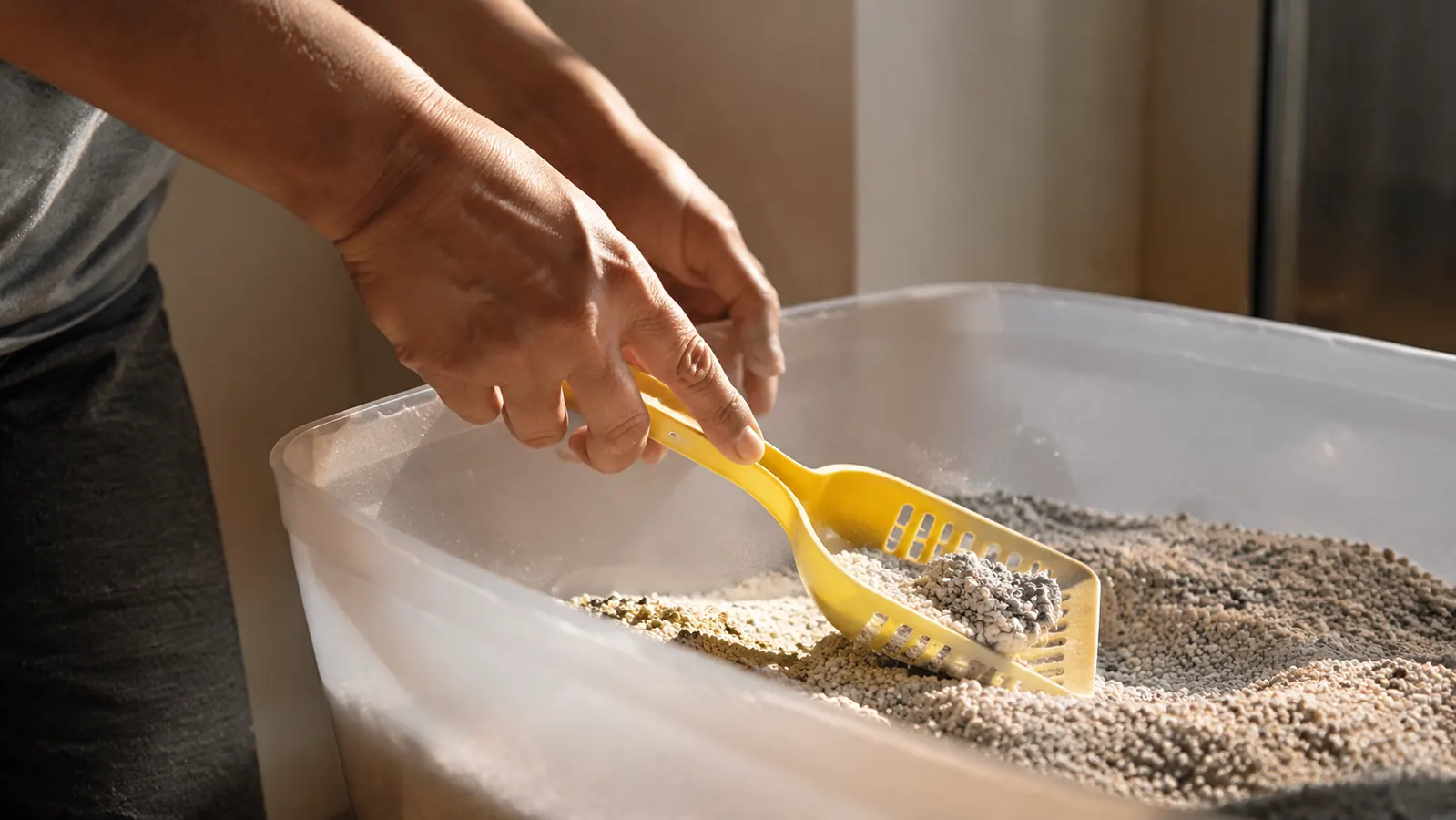
The upfront cost gap is real and it takes time to close. A solid open or covered litter box runs in the budget range and lasts for years without any moving parts to maintain. The Fumoi costs significantly more upfront. If you have one cat with no odor issues and you are a disciplined daily scooper who does not mind the task, a traditional box paired with a quality clumping litter and a carbon-filter hood does exactly what it promises for a fraction of the investment. For cat owners who are on a tight budget, who are renting temporarily and do not want to commit to a large appliance, or whose single cat simply does not generate enough waste volume to justify it, a traditional box is not a compromise. It is just the right tool for that specific situation.
Litter flexibility is the other genuine advantage that a standard box holds over any self-cleaning unit. With a traditional box I can use crystal litter, paper pellets, wheat-based litter, or plain non-clumping clay depending on what my cats tolerate or what my vet recommends. Biscuit went through a stretch last year where her vet suggested a low-dust paper pellet litter due to a mild respiratory flare. I made that switch overnight with her open box, no transition period, no risk to any mechanism. The Fumoi is limited to clumping litter only. Non-clumping varieties do not form solid clumps the rake can capture, and running them through the unit risks jamming the motor and leaving a mess far worse than a traditional box would create. For cats with specific litter sensitivities, ingredient allergies to clay, or vet-directed litter changes, that constraint is a genuine limitation worth weighing before you buy.
With two cats, my old scooping routine added up to nearly 91 hours a year. The Fumoi cut that to about 11. That trade, spread over three years, is worth more to me than the upfront price difference.
Running the Three-Year Cost Math
People see the upfront price and stop there. That is the wrong place to stop. Over a three-year window, litter savings, liner cost, and electricity cost all factor in, and the result is different from the sticker-shock math most people do in their head. With a traditional two-cat setup, I was going through a 40-lb bag of clumping clay roughly every three weeks because manual scooping breaks apart clumps and increases the volume of material you pull out each session. Clumps that would stay intact in the drawer get broken into smaller pieces by the scoop, and those smaller pieces pass through the scoop slots and stay in the box, eventually fouling the remaining clean litter faster.
With the Fumoi, that same 40-lb bag lasts four to five weeks because the rake catches whole clumps before they fragment. Across three years, that difference in litter consumption alone closes a meaningful portion of the upfront cost gap. The Fumoi does use disposable waste drawer liners, which are a recurring expense, but third-party alternatives are available for less per roll and I have used them without any fit or function issues. The electrical draw is low, similar to running a small fan continuously. When I run the actual numbers across 36 months, the Fumoi's total cost of ownership lands closer to the traditional setup than you would guess from the day-one price tag alone. If you want a full three-month breakdown of costs and maintenance logs, I cover that in my long-term review linked below.
What Cat Acceptance Actually Looks Like in Practice
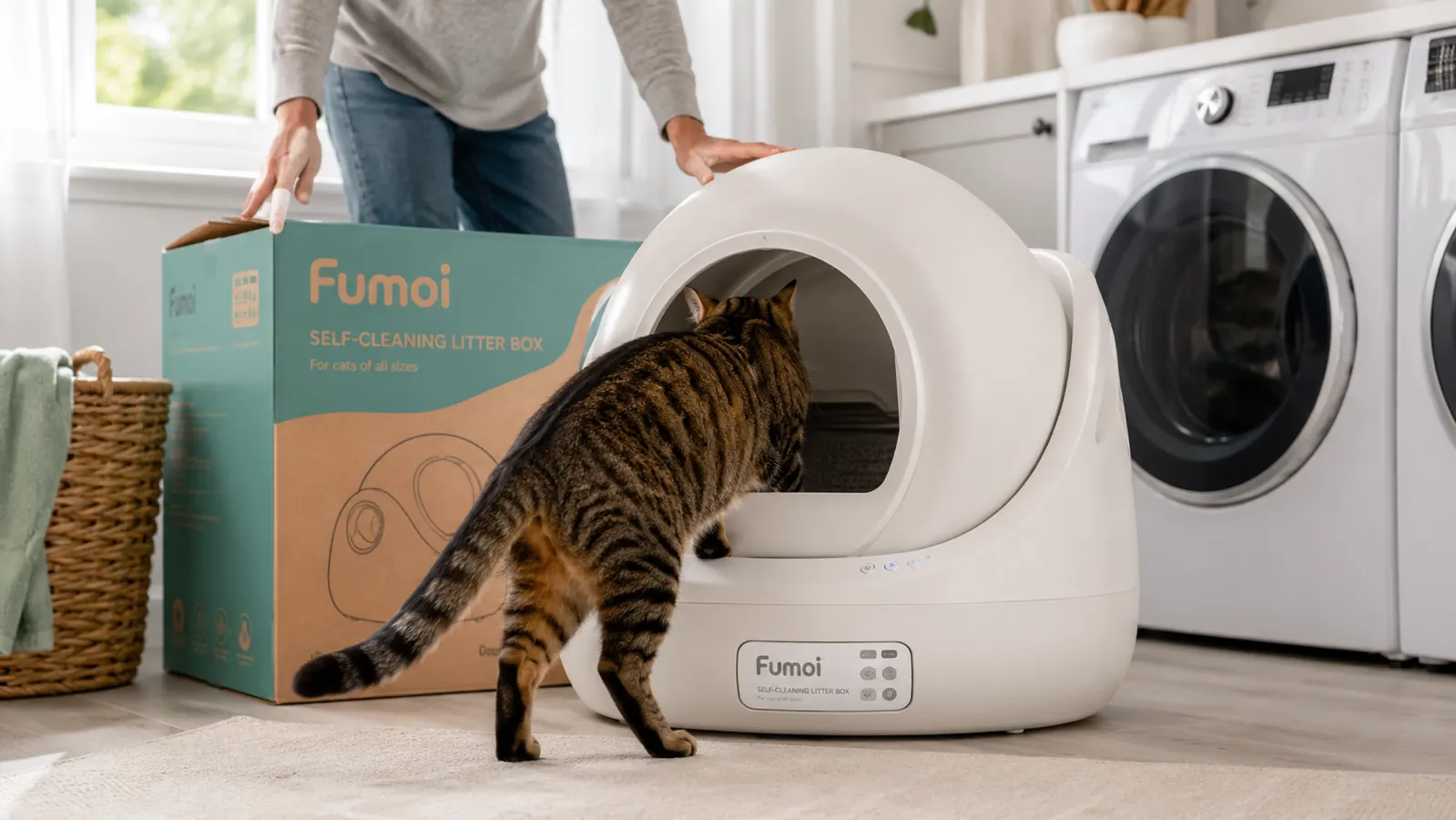
Pepper, my three-year-old tuxedo, walked into the Fumoi on day two without coaxing. He sniffed around the opening, walked in, used it, walked out, and never looked back. Biscuit, the nine-year-old tabby, was a different story. She would approach the unit, sniff the exterior, circle it once, and walk away to use the traditional box instead. I kept the Fumoi in manual mode for the first week, only letting it run cleaning cycles at night after both cats were asleep. By day nine she was using it without hesitation. The transition window is the most common reason people return self-cleaning boxes prematurely. The manufacturer's guidance of 7 to 14 days is accurate in my experience. The key is not rushing the process by running cycles while the cat is nearby, and not removing the traditional box too early.
The noise level is worth discussing plainly. The Fumoi's motor during a cleaning cycle sounds roughly like a quiet desk fan, maybe slightly louder. In a bathroom down the hallway with the door cracked, it is barely audible from the bedroom. In a studio apartment where the box sits in the main living space, it would be more noticeable. I scheduled the auto-clean window to only run between 10pm and 6am and it has not disrupted sleep once. The motor runs for about 90 seconds per cycle. That is a reasonable tradeoff for the maintenance savings, but it is honest information worth having before you place the unit in a bedroom.
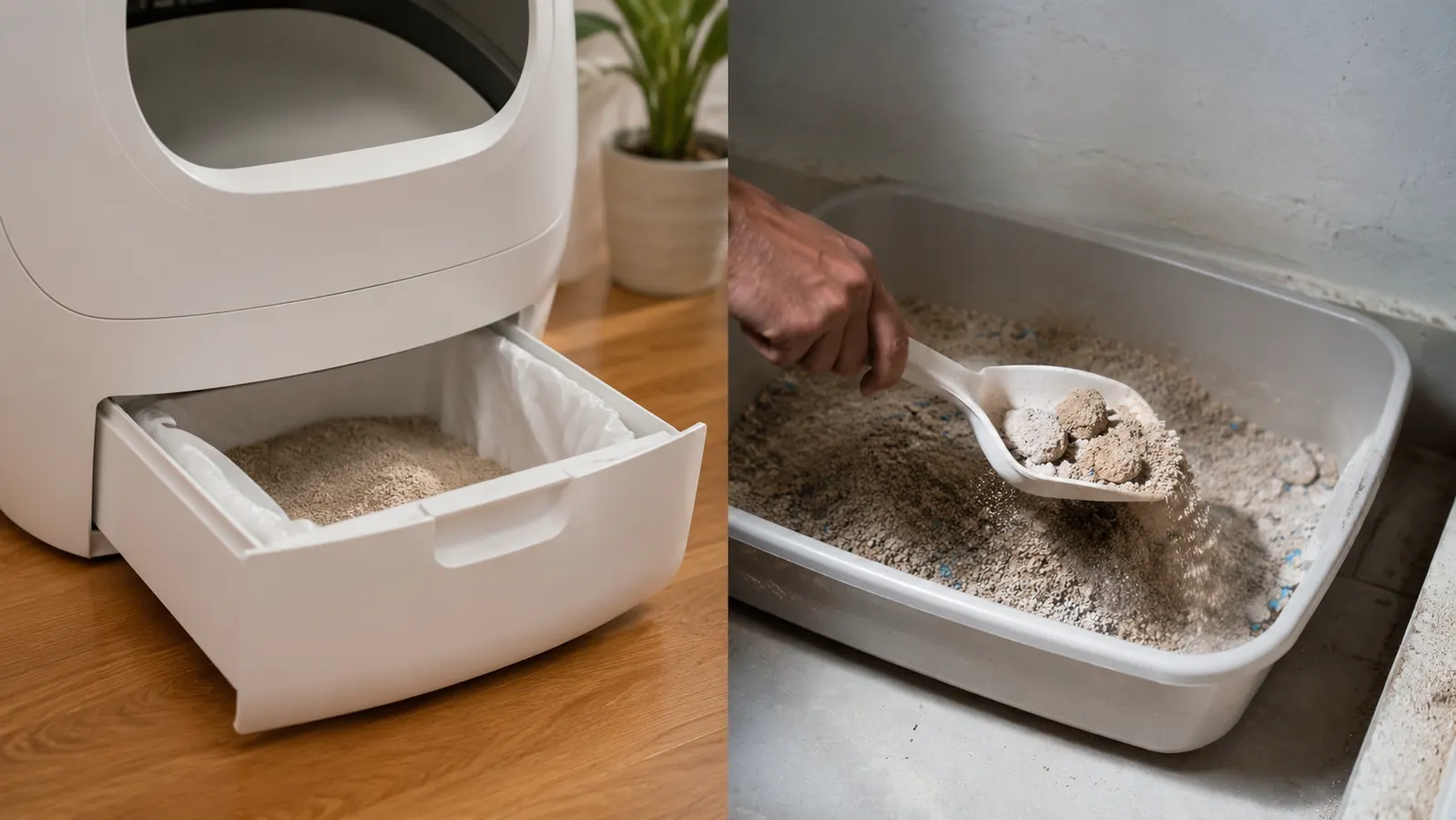
Who Should Buy Which
Buy the Fumoi if: you have two or more cats, the daily scooping routine genuinely adds friction to your mornings, odor in a smaller home or apartment is a persistent problem you have not fully solved, or you want passive health monitoring for a cat with a history of urinary or kidney issues. The three-year math works in your favor, the daily time savings are not trivial, and the odor control is the real deal. Read through my in-depth long-term test and my honest review for more detail on the rake jam rate and app reliability before you commit.
Stick with a traditional box if: you have one cat with no meaningful odor buildup, a consistent scooping habit you genuinely do not mind, a tight budget where the upfront cost is not realistic right now, or a cat with a medically directed litter type that is not clumping-compatible. A well-chosen open or covered box with the right litter and a daily scoop is not a lesser choice. It is the correct choice for a lot of households, and there is no shame in that math. Buy what your actual situation calls for, not what sounds most impressive.
One more thing worth saying clearly before I close: do not buy a self-cleaning box expecting zero maintenance. The Fumoi still needs the waste drawer emptied every one to two weeks depending on your cat count, the interior globe surface wiped down monthly to prevent odor buildup on the plastic, and the rake checked occasionally for litter residue around the teeth. It eliminates daily scooping. It does not eliminate upkeep entirely. Go in with accurate expectations and you will be satisfied. Go in expecting a fully hands-off appliance and you will be disappointed.
Still scooping twice a day? The Fumoi handles it while you sleep.
The Fumoi Automatic Self-Cleaning Litter Box works best for multi-cat homes and owners who are done with the daily scooping routine. Check today's price and availability on Amazon and see how it fits your setup.
Amazon Check Today's Price on Amazon →Ready to close out the daily scooping routine for good?
The Fumoi self-cleaning box logs every visit, controls odor between cleanings, and drops annual litter box time from 91 hours to about 11 for a two-cat home. Check current pricing on Amazon, look at the available configurations, and see whether it ships to your area today.
Amazon Check Today's Price on Amazon →