
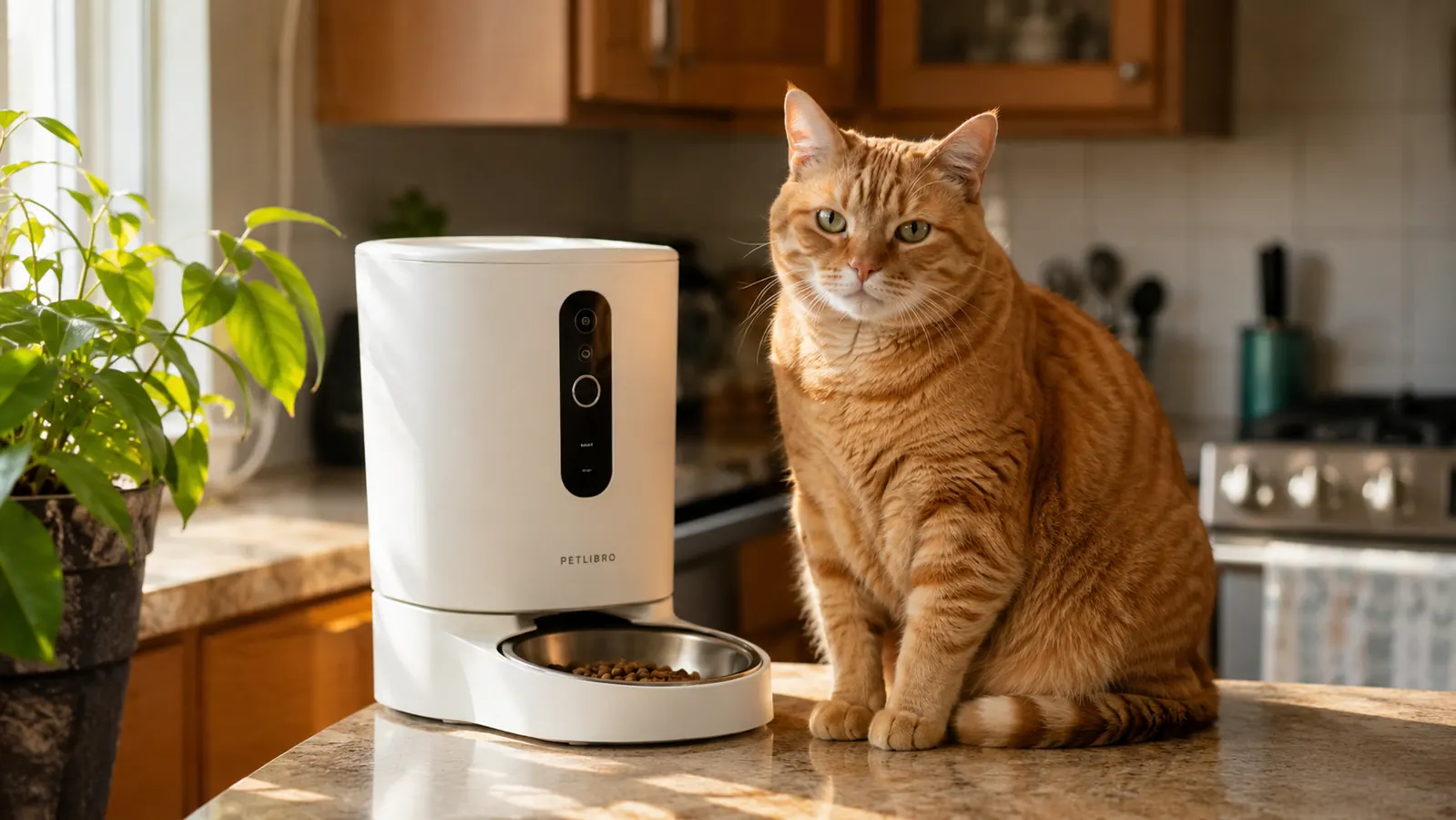
My vet told me for the second year in a row that my cat Biscuit was too heavy. Fourteen pounds on a frame built for ten. She showed me the chart, the one with the silhouettes ranging from skinny to round, and pointed without blinking at the far right. I nodded. I told her I'd do better. I went home, scooped what I thought was a half-cup of kibble, and set it in front of Biscuit while he inhaled it in about forty-five seconds. That was the whole system. And it had been failing for two years. The PETLIBRO RFID Automatic Cat Feeder changed that.
The thing nobody tells you about free-feeding is that it feels like love. You put food down, the cat is happy, you feel like a good owner. What you're actually doing is handing a food-obsessed animal an unlimited buffer and wondering why the vet keeps frowning. I knew Biscuit ate too much. I just didn't know how to stop it without standing over his bowl with a timer like some kind of kibble security guard.
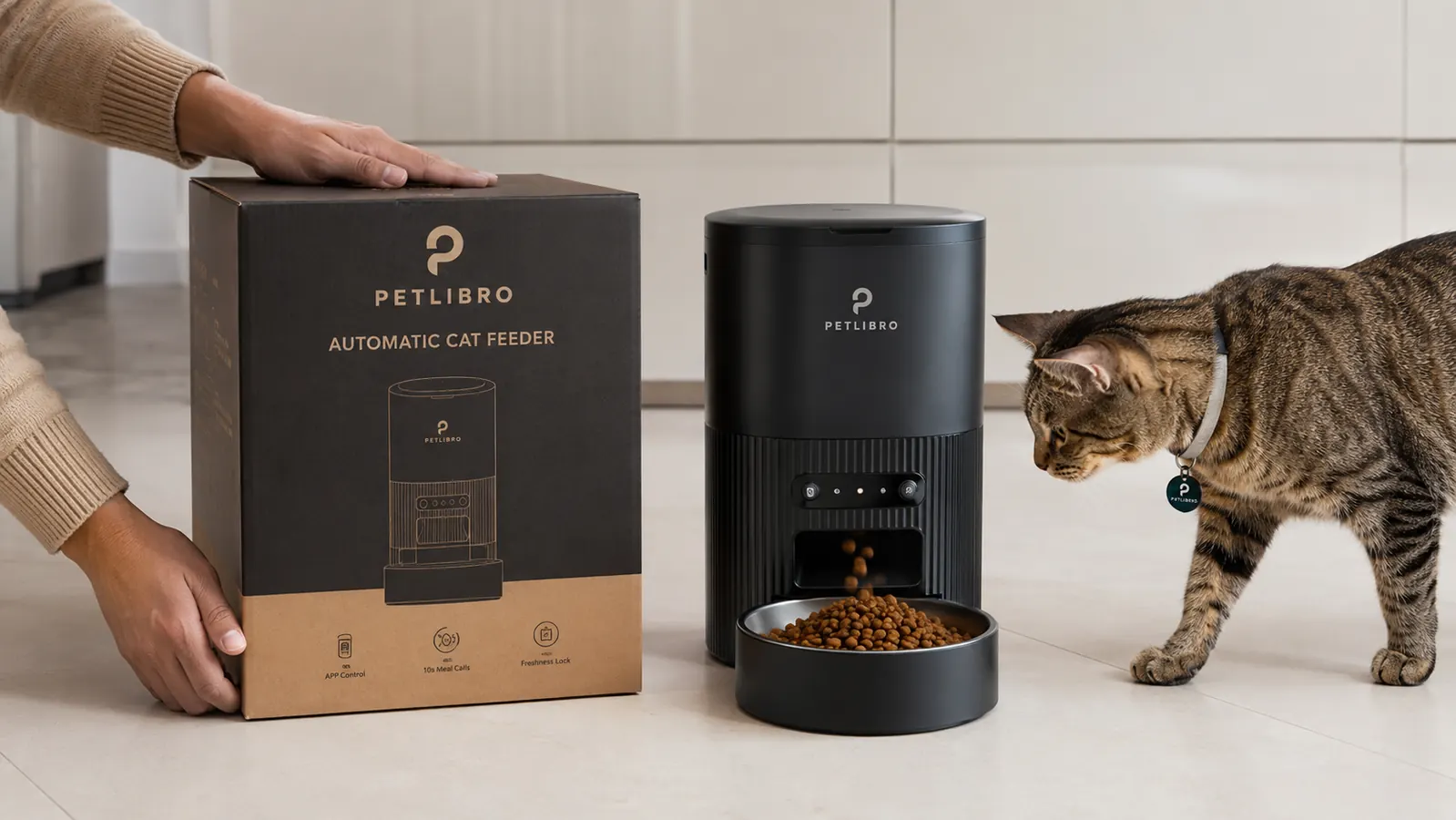
My sister has two cats and she'd been using a timed feeder for about a year. Not the RFID kind, just a basic programmable one. It worked fine for her because her cats didn't compete for the same bowl. My situation was different. I had Biscuit and then I had Mango, my seven-year-old tortoiseshell who eats like a bird and leaves food in her bowl. Biscuit had discovered this and turned Mango's leftovers into a second meal every single day. A plain timed feeder wasn't going to solve that problem. It would just give Biscuit two bowls to empty instead of one.
The RFID collar sensor concept sounded almost too clever when I first read about it. Each cat gets a collar tag. The feeder reads the tag when the right cat approaches and opens only for them. Biscuit's feeder stays closed when Mango walks up. Mango's stays closed when Biscuit walks up. On paper, obvious. In practice, something I had genuinely never seen work until I set this up in my kitchen. It took about twenty minutes to configure through the app, and the first time Biscuit trotted over to Mango's feeder and it did not open, I actually laughed out loud.
The first time Biscuit trotted over to Mango's feeder and it did not open, I actually laughed out loud.
If your cat is stealing food from another cat's bowl, this is the fix.
The PETLIBRO RFID feeder uses collar sensors to open only for the right cat. Portion sizes, meal timing, and locking lid all set through the app. Over 19,000 ratings and a 4.2-star average on Amazon.
Amazon Check Today's Price on Amazon →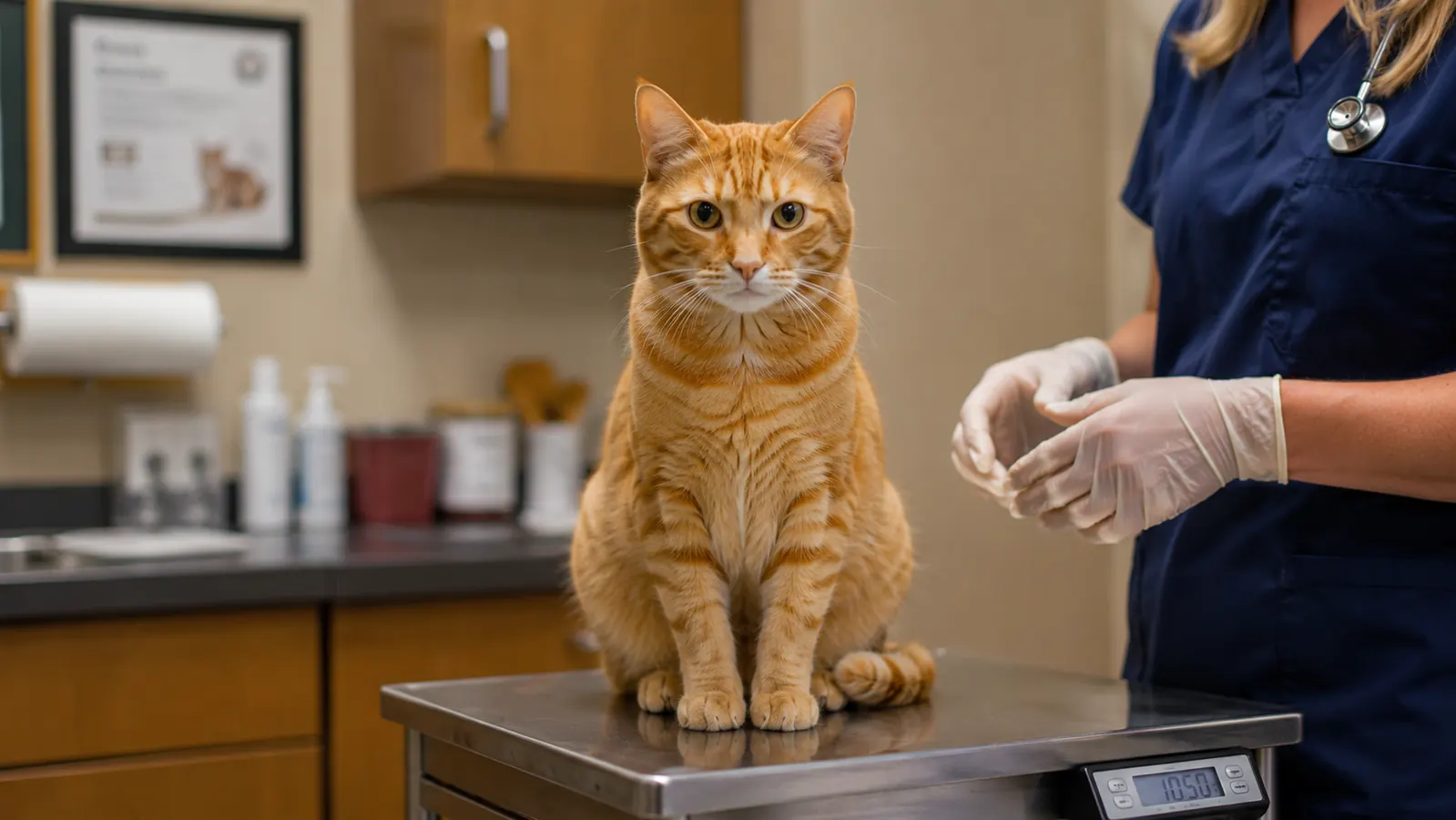
I set Biscuit to four small meals a day, each one a measured quarter-cup. That's what the vet had recommended as a starting point for weight loss on a cat his size. Before the feeder, I was doing two big scoops from memory and calling it close enough. Turns out 'close enough' was running maybe thirty percent over target on most days. The app lets you dial in grams rather than guessing by eye, and if you've never weighed a quarter-cup of dry kibble versus what you think a quarter-cup looks like, do that once. The difference will bother you.
By week three, Biscuit had lost just over a pound. Not dramatic, but real and consistent. More importantly, he stopped hovering over Mango's feeder. The lid locked him out reliably enough that he eventually stopped trying. He still complained at me every morning before his 7 a.m. meal, but that was familiar territory. The yelling I can handle. The sneaky second-bowl raids were the problem.

There are things I'd warn you about honestly. The feeder is not silent. There's a motor sound when it dispenses and the lid mechanism has a click to it. Neither is loud, but if your cat is skittish about mechanical sounds, plan for a week or two of adjustment. Also, the collar tags are not tiny. Biscuit wears them fine. Mango dragged her feet about it for a few days before she forgot they were there. If your cat has never worn a collar or refuses them entirely, the RFID system won't help you. That's worth knowing upfront.
The app connectivity occasionally drops and needs a reconnect, maybe once every two or three weeks. Not a dealbreaker for me, because the feeder runs its schedule off its own internal clock even without Wi-Fi. But if you're someone who wants real-time confirmation that every single meal fired, you'll check the app more than I do. These are the trade-offs. I'd rather you go in knowing them.
What I'd Tell You If We Were Sitting at My Kitchen Table
If you're dealing with a cat that's overweight, eating another cat's food, or just getting portions you can't control by hand, I'd tell you the PETLIBRO RFID feeder is a genuinely useful piece of gear. Not a miracle. Not a cure for an underlying issue. But a practical tool that removes the guesswork from feeding and, if you have multiple cats, actually solves the bowl-stealing problem in a way that nothing else I've tried has. You still have to pick the right portion size, still have to clean the bowl, still have to pay attention to how your cat responds. The feeder handles the discipline part so you don't have to be the bad guy at every meal. For me, that was the piece I was missing. If you want the longer breakdown of how the feeder performs across four months of daily use, the long-term review covers all of it. And if you're deciding whether a timed feeder makes sense for your situation at all, the reasons-list article is a good starting point before you spend anything.
Ready to stop guessing on portions and end the bowl-stealing for good?
The PETLIBRO RFID feeder is the most practical solution I've found for multi-cat households with different portion needs. See current availability and today's price on Amazon.
Amazon Check Today's Price on Amazon →